
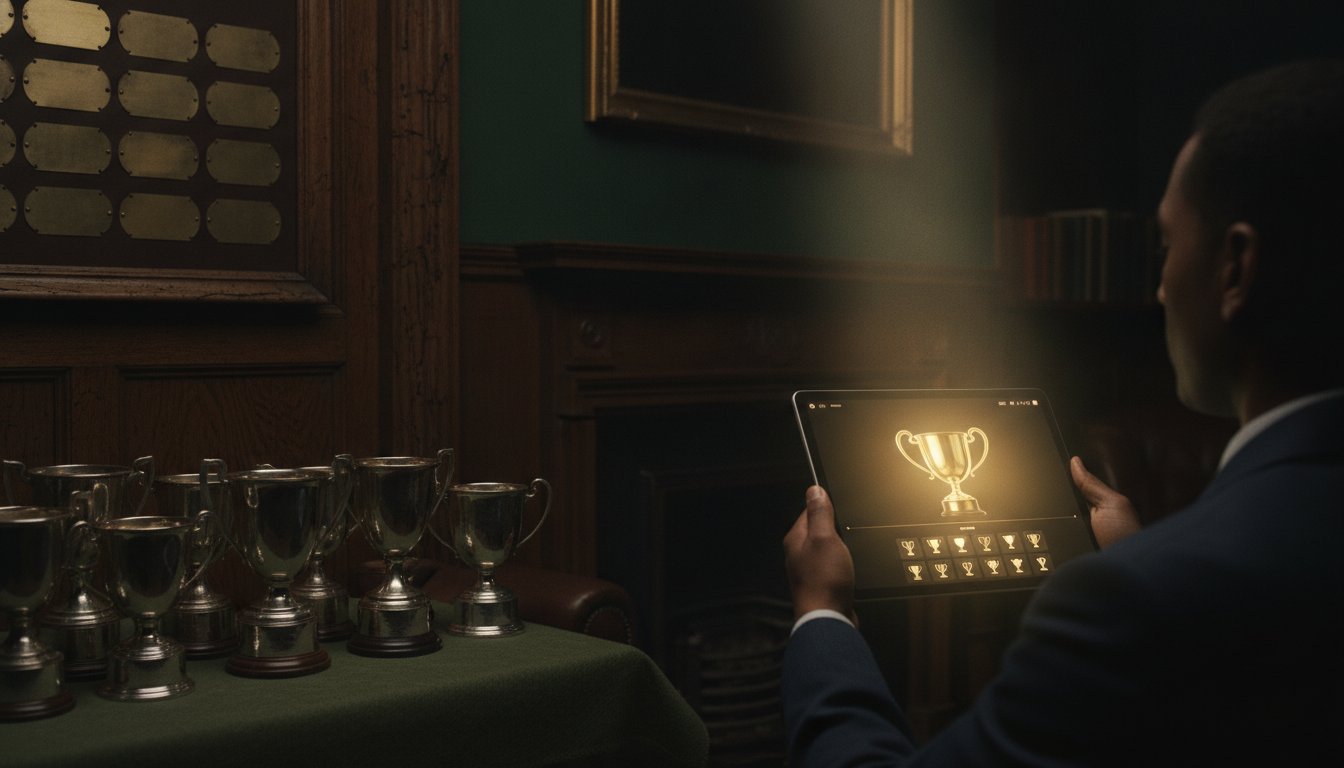
The most valuable asset in your clubhouse isn't the silver in the cabinet; it's the names engraved upon it that are slowly fading into obscurity. You likely recognise the problem: honours boards are running out of wall space, and those intricate engravings from the 1970s are becoming nearly impossible to read. It's a common challenge for organisations that value their past but find themselves constrained by the physical limits of a traditional trophy room.
A virtual trophy room for clubs offers a modern solution to these heritage hurdles. By transitioning to a digital archive, you can transform dusty cabinets into interactive experiences that engage younger members and provide a secure backup of every achievement. In this article, we'll show you how to move from physical clutter to digital order using the best practices for 2026. You'll discover how modern clubs are using AI transcription to preserve their history, making every past winner searchable and every record accessible to the entire community. We will explore the shift from manual data entry to automated preservation, ensuring your club's legacy remains vibrant for generations to come.
Key Takeaways
- Learn how a virtual trophy room for clubs creates a centralised, searchable archive that protects your heritage from the physical limits of clubhouse walls.
- Explore how interactive winner databases can reconnect former members and alumni with their past achievements through searchable digital profiles.
- Safeguard your club's institutional memory against fire, theft, or damage by digitising records into a secure and portable format.
- Discover how AI transcription technology eliminates the bottleneck of manual data entry, turning decades of engravings into digital records in seconds.
- Ensure long-term data security by prioritising CSV export capabilities, allowing you to maintain permanent control over your club's historical records.
Table of Contents
The Evolution of Recognition: What is a Virtual Trophy Room?
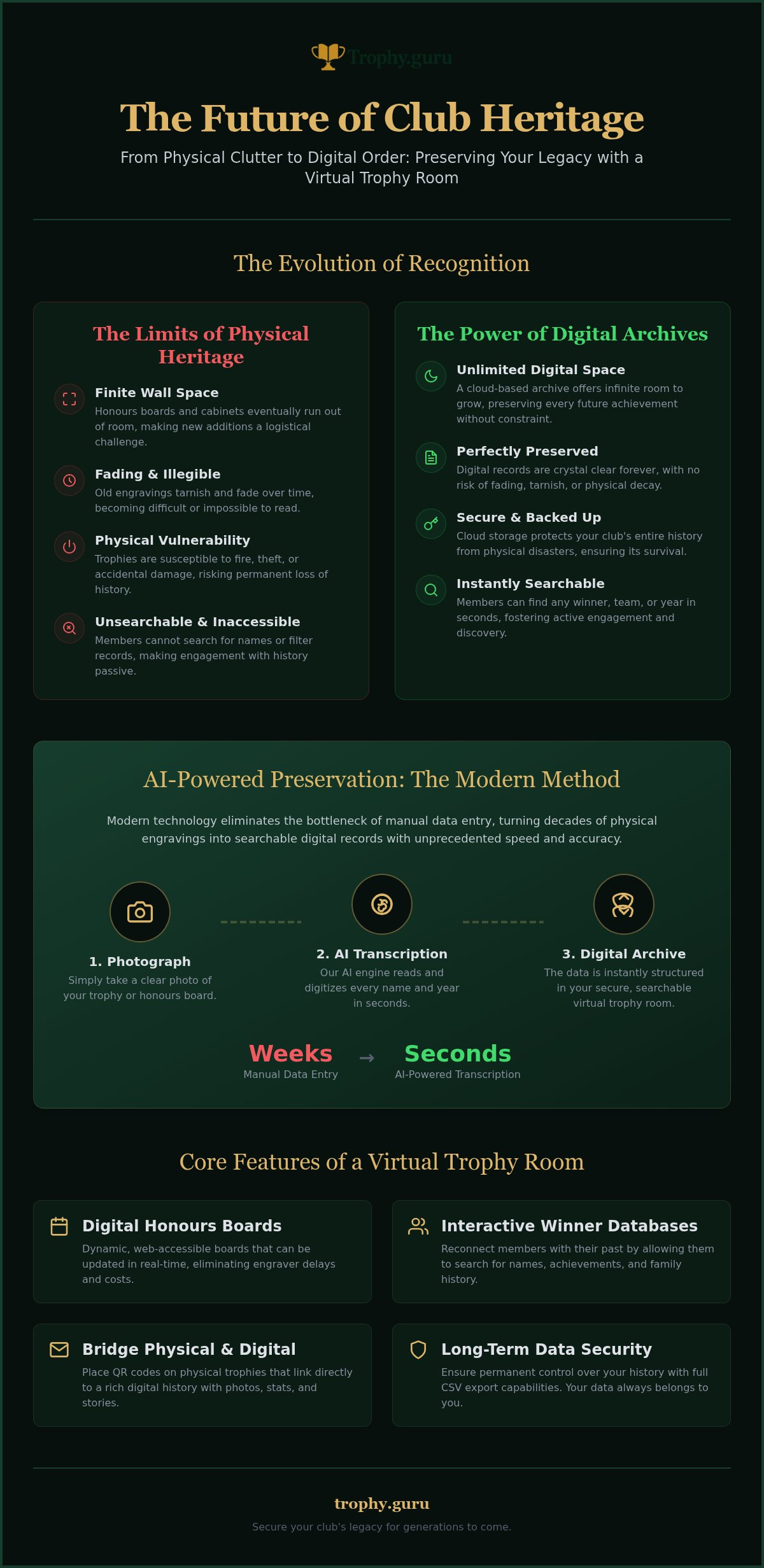
A virtual trophy room for clubs is a centralised digital archive that captures the entirety of an organisation's competitive history. While a physical cabinet is a static display, this digital counterpart mirrors the heritage of the club while adding layers of searchability and accessibility. It moves beyond the limitations of glass and wood. It creates a space where every name, every year, and every achievement is preserved in the cloud. As we consider The Evolution of Recognition, we see that preservation is no longer about physical storage but about digital accessibility and long-term data security.
This digital environment typically includes honours boards, winner databases, and interactive hall-of-fame profiles. It serves as a permanent cloud-based backup for physical awards that may tarnish, be misplaced, or suffer damage over time. By digitising these records, a club ensures that its legacy is not tied to a single physical location or a fragile piece of silver. It transforms a collection of objects into a searchable, living history that members can access from anywhere.
From Physical Cabinets to Cloud Archives
Physical space limits are often the primary driver for digitisation. Most clubs eventually reach a point where their walls are full. Adding a new name to a wooden board becomes a logistical headache rather than a moment of celebration. Moving to a cloud archive solves this problem permanently. It shifts the member experience from passive viewing to active, searchable engagement. Instead of squinting at small engravings, members can search for specific names or filter by decade. This transition allows for much richer storytelling. You can pair a name with a team photo, a match report, or a career biography. It turns a simple list into a meaningful legacy.
The Role of Digital Honours Boards
Traditional wooden boards are a staple of British club life, but they are difficult to maintain. They require specialist engraving and offer no way to search through decades of history. Modern digital honours board for sports clubs improve member visibility by making this information dynamic and web-accessible. Updates happen in real-time. You don't need to wait for a physical engraver to visit the clubhouse or deal with the cost of shipping boards back and forth. This ensures that your virtual trophy room for clubs remains up to date without the usual delays. It also provides a secure, portable record that can be shared with members and alumni regardless of their current location.
Inspiring Examples of Digital Trophy Cabinets in 2026
Modern clubs aren't limited to static displays. A virtual trophy room for clubs allows for a dynamic presentation of history that adapts to the viewer's interests. For example, an Interactive Hall of Fame can profile legendary members by pairing their names with high-resolution photos and career statistics. This transforms a name on a board into a real person with a story, making the club's past feel tangible for the next generation.
Searchable winner databases are another powerful application. Members can find their own names or explore their family history within the club's records. This is particularly effective for anniversary heritage projects. When a club reaches a centenary milestone, a digital room can house a 100-year history that's easily accessible to current and former members. It ensures that every milestone is celebrated and preserved correctly.
Consolidating records into multi-sport hubs is also a growing trend. Many UK clubs have cricket, tennis, and bowls sections, each with its own history. A single digital home allows for a unified view of the entire organisation's success. As highlighted in The Strategic Benefits of Digitising Club Heritage, this level of accessibility fosters greater public participation and engagement with local traditions.
The Web-Based Member Portal
Most clubs now prioritise mobile-friendly archives. Members browse these collections from home, sharing achievements with friends and family. A practical way to bridge the physical and digital world is by placing QR codes on physical trophies. When scanned, these codes link directly to the digital story behind the award. Integrating these archives into your existing club website ensures that your heritage is always just a click away. If you're ready to start your journey, you can explore AI transcription options to begin building your portal.
The Interactive Clubhouse Display
A virtual trophy room for clubs doesn't require expensive, custom hardware to create a modern "Wall of Fame." Many clubs use low-cost smart TVs to display rotating honours board data in the clubhouse lounge. This setup allows users to "flip" through digital yearbooks and plaques using a simple remote or a touchscreen interface. It provides a high-impact visual experience without the five-figure price tags associated with bespoke installations. By using standard hardware, clubs can maintain a clean, uncluttered look that respects the traditional aesthetic of the clubhouse while embracing modern utility.
The Strategic Benefits of Digitising Club Heritage
Heritage is the foundation of any successful club culture. It provides the context for current achievements and a sense of belonging for every member. However, relying solely on physical records is a risky strategy. A virtual trophy room for clubs isn't just a digital novelty; it's a vital tool for institutional preservation. It protects your history against the very real threats of fire, theft, or environmental damage that can ruin wooden boards and silver trophies over decades. By creating a digital backup, you ensure that the names of past winners are never lost to time or neglect.
Efficiency is another significant driver for this transition. Many organisations struggle with fragmented records, relying on a mix of paper ledgers, old spreadsheets, and the fading memories of long-serving members. Centralising these records into a single, authoritative source of truth eliminates these administrative bottlenecks. It creates a professional standard for record-keeping that survives committee changes. This level of organisation also serves as a beacon for younger members. Seeing the documented path of past winners creates a visible trajectory for success, turning static history into a source of active, daily inspiration.
Engaging the Next Generation
Younger athletes and students live in a digital-first environment. They expect information to be searchable, accessible, and shareable. A digital archive provides this "searchability factor," allowing them to find their own achievements or those of their mentors in seconds. This fosters a sense of pride that is easily shared across social platforms, which naturally amplifies the club's reputation. Integrating a virtual trophy room for clubs also allows you to gamify your history. You can highlight long-term records or create digital leaderboards that encourage current members to chase historic milestones, making the past feel relevant to the present.
Administrative Peace of Mind
Managing a club's legacy shouldn't be an overwhelming task for volunteers. Centralising your records ensures that data remains accurate and easily accessible for years to come. Understanding the process of digitizing old honours boards is a crucial step toward reducing the workload for future committees. Instead of manually searching through dusty archives or unreadable engravings for annual award planning, you have a searchable database at your fingertips. This ensures that no winner is forgotten and that the transition between committee members remains seamless, professional, and orderly.
Key Features of a Searchable Sports Club Database
A virtual trophy room for clubs is only as effective as the database behind it. While many clubs focus on the visual display or the hardware in the clubhouse lounge, the true value lies in how that data is structured. A robust system moves beyond simple lists. It uses searchable metadata to categorise every win by year, competition, and specific trophy name. This ensures that a century of history remains manageable. It allows for scalability, meaning the system grows naturally as new champions are crowned each season without requiring a redesign of the interface.
Storing high-resolution imagery alongside this data is equally vital. By capturing clear photos of the original physical awards, you preserve the visual heritage of the club. This is particularly important for trophies with intricate silverwork or unique designs that may eventually tarnish. These images act as a digital twin to the physical object, providing a permanent visual record that is accessible to everyone. This combination of data and imagery ensures that the "institutional memory" of the club is never compromised by physical decay.
The Power of Searchable Records
A common mistake is thinking a simple PDF scan of an old honours board is enough. It isn't. PDFs are static and often unreadable by search engines or mobile devices. A modern archive requires granular searchability. Members should be able to filter records by decade, specific sport sections, or award types. This level of detail transforms a passive archive into an active tool for research and pride. AI verification plays a crucial role here. It ensures that unreadable engravings are accurately transcribed, correcting for the spelling errors or faded dates that often plague manual records. This accuracy is what builds trust in the digital archive for all members.
Data Integrity and CSV Exports
Clubs must prioritise data ownership. You shouldn't just own the display software; you must own the raw records. Data portability is a non-negotiable feature for long-term security. CSV exports are the industry standard for this. They allow you to download your entire history into a universal format. This provides an insurance policy against technology changes. If you decide to switch platforms in a decade, you can migrate your data in seconds. These exports also have immediate practical uses. You can use the digital data to automate the printing of annual prize-giving programmes, saving hours of manual typing for the secretary. If you want to ensure your records are secure and portable, you can start your digital archive with AI transcription to create a permanent record today.
Building Your Virtual Room with AI Trophy Transcription
The biggest hurdle in launching a virtual trophy room for clubs isn't the software or the screens; it's the data entry. Transcribing 50 years of physical records is a significant bottleneck that often stalls heritage projects before they begin. Manual entry is time-consuming and prone to human error, especially when dealing with faded engravings or archaic scripts. AI Trophy Transcription changes this dynamic. It allows you to convert a photograph of a physical award into searchable text in seconds.
This technology is specifically designed to handle the unique challenges of clubhouse archives. It effectively captures data from reflective silver surfaces and the curved edges of traditional trophies, which standard scanning tools often struggle with. This approach positions modern technology as a respectful guardian of tradition. It provides the efficiency needed to process hundreds of records while maintaining the reverence due to the club's historical achievements.
The Trophy Guru Workflow
The process is designed for simplicity and accuracy. It follows a logical three-part rhythm to ensure every detail is captured correctly:
- Photograph: Use a standard smartphone to take clear photos of your trophies and honours boards.
- Upload: Submit these images for AI-assisted extraction of names, years, and categories.
- Verify: Review the extracted data to ensure perfect accuracy before your digital honours board goes live.
This methodical workflow ensures that the transition from physical clutter to digital order is seamless. It removes the need for specialised on-site photography services, allowing your own committee to lead the preservation effort at their own pace. By using AI to handle the heavy lifting, you can focus on the storytelling aspects of your club's history.
Cost-Effective Heritage Preservation
Budget is a primary concern for most UK clubs. Many digital display solutions rely on high-cost annual subscriptions that can drain a club's reserves over time. A more sustainable model is the "pay once" transcription approach. This allows you to invest in the accuracy of your data without being tied to expensive hardware contracts. You can start small by taking advantage of a free initial trophy transcription. This allows you to test the accuracy of the AI on your most challenging engravings.
You can scale the project from a single trophy to an entire clubhouse archive as your budget allows. This modular approach ensures that your virtual trophy room for clubs is both a professional resource and a budget-friendly investment in your community's legacy. Once the transcription is complete, your records are secure, portable, and ready to inspire the next generation of members.
Securing Your Club's Legacy for the Next Century
Transitioning to a virtual trophy room for clubs is more than a technical upgrade; it's an act of stewardship. By digitising your honours boards and awards, you protect decades of achievement from physical decay and environmental risks. You also create a living, searchable archive that bridges the gap between your club's founding members and the digital-native athletes of today. This move ensures that institutional memory remains vibrant, accessible, and ready to inspire future generations.
The transition doesn't have to be a daunting administrative burden. Modern AI transcription allows you to bypass manual data entry, providing a precise and efficient way to capture every name and date from your physical collection. Trusted by sports clubs and schools nationwide, this technology offers a secure, scalable foundation for your heritage. Take the first step toward a permanent digital archive today. Start building your virtual trophy room with a free transcription and ensure your club's history is never forgotten. It's time to bring your heritage into the light of the digital age.
Frequently Asked Questions
What is a virtual trophy room?
A virtual trophy room for clubs is a centralised digital archive that preserves an organisation's competitive history in the cloud. It mirrors your physical cabinet but adds modern utility like searchability and global accessibility. These rooms typically feature digital honours boards and interactive winner databases that members can browse from any device. By moving records to a digital space, you create a permanent backup that protects your club's heritage against physical damage or loss.
How much does it cost to digitise a club honours board?
Costs vary based on the scale of your archive, but the most efficient approach uses a transactional payment model. Instead of paying for expensive hardware subscriptions, you pay once for the transcription of your records. This "pay once for more" model is designed to be budget-friendly for local organisations. You can often begin with a free initial trophy transcription to test the accuracy of the AI before committing to a full clubhouse digitisation project.
Do we need expensive touchscreens to have a digital trophy room?
You don't need bespoke hardware or expensive touchscreens to launch a digital archive. While high-end installations exist, many clubs use low-cost smart TVs to display rotating honours board data in their lounge. The archive is also accessible via standard smartphones and tablets. This web-based approach ensures that your virtual trophy room for clubs remains cost-effective while providing the same level of engagement as a custom-built museum display.
How do you transcribe names from old, shiny silver trophies?
Transcribing reflective surfaces like silver or gold plating requires specialised AI technology. Traditional scanning often fails on shiny, curved surfaces, but modern AI Trophy Transcription is specifically designed to extract names and years from these challenging materials. You simply photograph the award with a standard smartphone. The software then processes the image to identify and extract the engraved text, which you can then verify for perfect accuracy before it goes live.
Can we export our club records if we decide to change systems?
Data portability is a critical feature of any professional digital archive. You should always ensure you have full ownership of your records rather than being locked into a specific software provider. Most reputable systems offer CSV archive export capabilities. This allows you to download your entire history into a universal spreadsheet format at any time. It provides administrative peace of mind, ensuring your records remain secure even if you decide to change platforms in the future.
Is a virtual trophy room accessible on mobile phones?
Yes, modern digital archives are fully mobile-responsive. This allows members to browse club history from home or share their own achievements with friends and family via social media. Accessibility is a key driver for member engagement, particularly for younger athletes who expect information to be available on their phones. By providing a mobile-friendly member portal, you ensure that your club's heritage is always just a few taps away for every generation.
How long does it take to build a searchable club archive?
Building a searchable archive is significantly faster than traditional manual entry. While typing out fifty years of names could take a volunteer weeks of work, AI transcription extracts data from images in seconds. The total time required depends on how quickly you can photograph your collection. Once the images are uploaded, the AI handles the heavy lifting, leaving you with a simple review process to ensure every name and date is correct before publishing.
Do we need an IT department to manage a digital honours board?
You don't need any specialist technical knowledge or an IT department to manage these systems. They are designed for club secretaries and volunteers who value order and clarity but may not be tech experts. The workflow is straightforward: you photograph the records, upload the images, and verify the extracted data. This intuitive process simplifies a task that used to feel overwhelming, allowing any committee member to become a modern guardian of the club's tradition.