
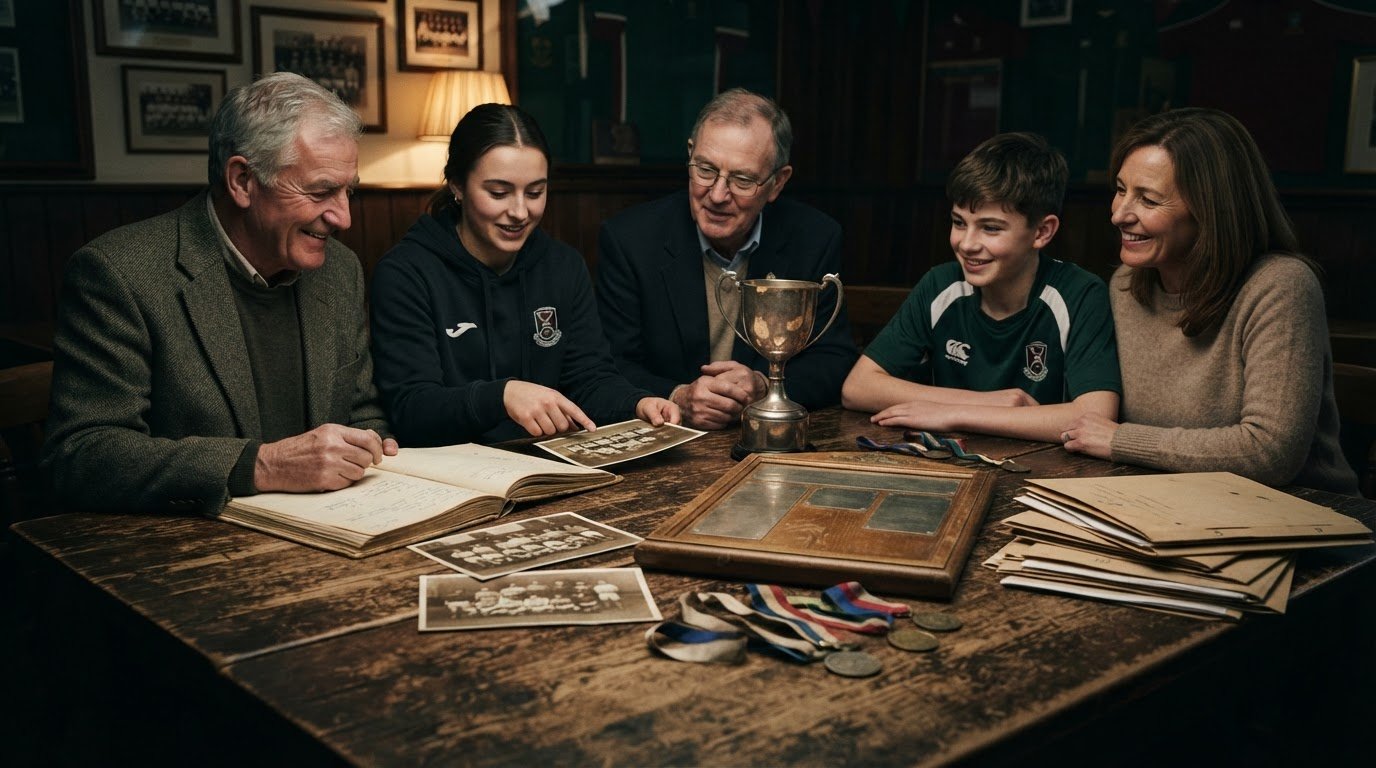
What if the story that brings a young member closer to your club is tucked away in a dusty scrapbook or remembered only by a former player? The best sports club legacy project ideas don’t need to begin with a grand exhibition. They can start with the stories, records and moments your community already holds.
Club history is often scattered across cupboards, old photographs, trophy engravings and personal memories. That can make it hard to know where to begin, and past achievements may feel distant to newer members. A manageable project can bring these pieces together and give people of different generations a meaningful role in preserving them.
This guide shares 10 practical ways to capture your club’s heritage, recognise the people behind it and make its history easier to revisit. From oral history interviews and shared memory collections to searchable winner records and digital honours boards, each idea offers a clear starting point. Choose a project that fits your volunteers and resources, then build a lasting record together.
Key Takeaways
- Choose from sports club legacy project ideas that suit your volunteers, available material and members’ interests.
- Invite former and current members to contribute memories, photographs and context, helping connect different generations.
- Compare project formats by the stories they preserve, the effort involved and how members will access the results.
- Turn trophy and honours board details into searchable winner records that complement, rather than replace, wider club stories.
- Set clear ownership and a simple update routine so future members can find, understand and revisit the club’s heritage.
Table of Contents
- Why sports club legacy projects matter beyond anniversaries
- People-centred sports club legacy project ideas that bring stories forward
- Trophy, photograph and archive projects that make club heritage visible
- How to choose and start the right legacy project for your club
- Keep your sports club legacy project useful for future members
Why sports club legacy projects matter beyond anniversaries
A club’s history is more than a list of finals won or seasons completed. It also lives in the people who kept the club running, the traditions that brought members together and the memories missing from official records. Preserving these details can help long-standing members feel recognised and give newer participants a clearer sense of the community they’ve joined.
A sports club legacy project is a planned effort to collect, preserve or share the people, records and traditions that tell a club’s story. It can be modest: catalogue a box of programmes, record one former member’s memories or organise a set of photographs. The aim is to create something people can return to, not just a display for a single occasion.
An anniversary can be a useful starting point, but its exhibition or celebration may end when the day is over. Lasting heritage work gives material context and a place to be revisited. That might mean identifying people in a photograph, adding dates to a timeline or recording how a club tradition began. Start with what’s available, then add stories and evidence as they emerge.
What counts as a sports club legacy project?
Projects can capture stories, recognise contributors or make historical records easier to access. Examples include interviews with former players, a club timeline, an archive catalogue or a memorabilia display with clear captions. Some projects are physical, some digital, and others combine both. A catalogue can help members locate a programme in storage, while a display brings selected items into view.
Who should benefit from the project?
Think beyond the committee. Long-standing members, newer participants, families, volunteers and future club leaders can all benefit from an organised record of the club’s past. Invite different generations to contribute: a written record may show a team’s results, while a former player can recall the journeys, rivalries or traditions behind them. The practice of oral history offers a way to preserve personal perspectives alongside documentary evidence.
Participation matters. When members help choose stories, identify people in photographs or explain familiar customs, the project becomes a shared account rather than a history held only by the institution. That sense of ownership can make heritage more welcoming to people who haven’t been part of the club for decades.
The strongest sports club legacy project ideas fit the people and resources available. Choose one clear purpose, invite contributors and agree how the finished work will be maintained. A small, well-cared-for project can give future members a meaningful connection to the people and moments that shaped their club.
People-centred sports club legacy project ideas that bring stories forward
Personal memories add detail that scorebooks and match reports can’t capture. Choose a format that suits your club’s people and available time, whether that means recording a few short reflections or building a growing collection. These sports club legacy project ideas can stand alone or complement one another.
Collect oral histories and member stories
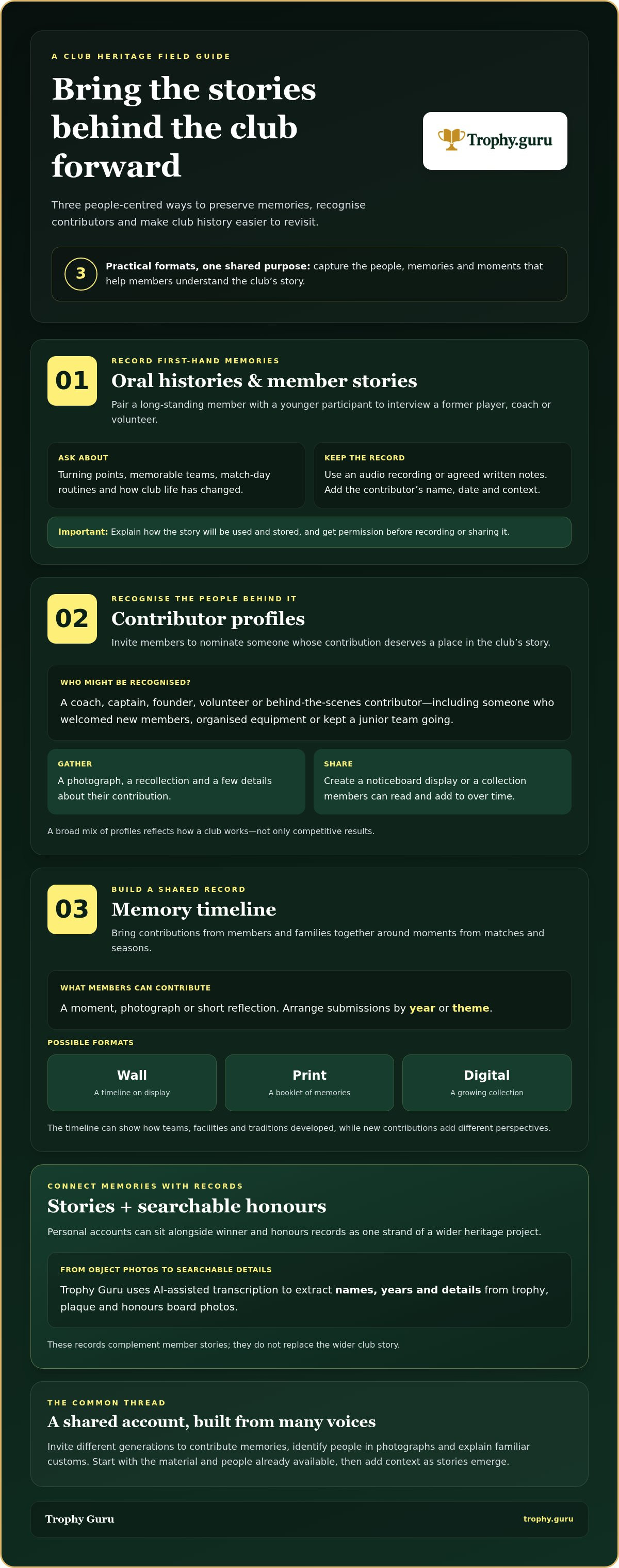
Pair a long-standing member with a younger participant to interview a former player, coach or volunteer. Ask about turning points, memorable teams, match-day routines and how club life has changed. Keep the conversation relaxed and focused. A short reflection on one season can be just as revealing as a longer life story.
Make an audio recording or agreed written notes, then add the contributor’s name, date and relevant context. Explain how the story will be used and stored, and get the contributor’s permission before recording or sharing it. Members can revisit the collection to learn about the club’s culture from the people who experienced it.
Celebrate the people behind the club
Invite members to nominate a coach, captain, founder, volunteer or behind-the-scenes contributor for a short profile. Ask the nominee or people who know them for a photograph, a recollection and a few details about their contribution. Profiles can form a noticeboard display or a collection that members can read and add to over time.
Make recognition broad enough to reflect how a club works. A profile might honour the person who welcomed new members, organised equipment or kept a junior team going, not only someone known for competitive results. That balance helps more people see themselves in the club’s history.
Build a shared memory timeline
Ask members and families to contribute a moment, photograph or short reflection about a match or season, then arrange the submissions by year or theme. The result could be a wall timeline, a printed booklet or a digital collection. Members can use it to explore how teams, facilities and traditions developed, while new contributions bring in different perspectives.
For a fuller picture, connect personal accounts with records of winners and honours. Trophy Guru uses AI-assisted transcription to extract names, years and details from trophy, plaque and honours board photos. The resulting searchable records can sit alongside member stories as one strand of a wider heritage project. Explore digital trophy and honours records.
Trophy, photograph and archive projects that make club heritage visible
Objects and records can make club history easier to explore, but each format involves different work. A trophy archive needs names and dates checked; a photo exhibition needs thoughtful selection and captions; a memorabilia collection depends on members explaining why items matter. Choose an output for the people who’ll use it, and treat the collection as one part of a broader heritage programme.
Turn trophies and honours into a searchable record
Record award names, years and winner details from trophies, plaques and honours boards. Trophy Guru uses AI-assisted transcription to extract details from uploaded images, helping clubs organise records without manually entering every detail. Members can browse the results through an online honours board, and the club can export the data as a CSV file for displays, anniversary materials or member research.
This project can be useful when award details are difficult to read or spread across several objects. Once the records are created, check names and dates against the original items, then add personal recollections to give results more context. For practical guidance on how to digitize sports club award records, use the linked guide alongside the archive project.
Create a visual collection members can explore
A themed photo exhibition or annotated timeline can bring selected moments into view. Choose a clear theme, such as a long-running competition, a changing club ground or the development of a junior section. Add dates, names and short recollections so visitors understand what they’re seeing, rather than relying on images alone.
For a memorabilia display, pair each selected object with a caption explaining who used it, which event it relates to and why it matters. Keep original items as part of the physical collection, and connect the display to digital records where useful. A QR code or simple catalogue reference can point members to related results or stories without making the original object redundant.
The volunteer effort depends on the collection. A small display needs research and captions; a searchable photo or object catalogue needs consistent descriptions and ongoing organisation. Start with a defined set of items and assign someone to check the details. To plan how to preserve club history online, use the club-history checklist as a companion resource.
These sports club legacy project ideas work best when the format serves the story. A trophy record helps members trace honours, while photographs and objects reveal the people and moments behind them. Together, they can make club heritage visible in the clubhouse and easier to revisit digitally.
How to choose and start the right legacy project for your club
A useful project starts with a clear purpose, not a demand to digitise everything. Ask members what they most want future generations to understand: a particular team, a much-loved tradition, the people who kept the club running or the winners recorded on its honours boards. The answer helps you choose an output with real value and a realistic maintenance plan.
Choose one story, find the people and material connected to it, agree a manageable output, then assign someone to check and care for the result. This sequence gives sports club legacy project ideas a practical starting point and keeps the work within reach of a small volunteer team.
Match the idea to your club’s people and resources
Take stock before setting the scope. List the photographs, trophies, programmes, result sheets and personal memories already available, along with members willing to contribute. Then weigh the project’s value against access to material, volunteer time and future upkeep. A small, accurate timeline may serve members better than an ambitious archive that stalls halfway through.
Choose a first collection or story that can be completed and reviewed. For example, focus on one competition’s winners or a single chapter in the club’s development. Think about how personal material will be handled: agree what contributors are comfortable sharing, credit them where appropriate, and record how their words or memories may be used. Clear expectations help protect trust and preserve context.
Set clear roles and a useful first milestone
Keep responsibilities simple. Name a project lead to coordinate the work, contributors to gather stories or records, and someone to check names, dates and captions before anything is shared. Agree where the finished material will live and who will update it. If members can submit information, define how it will be reviewed so corrections and new details don’t get lost.
Set a tangible first milestone, such as a small exhibition, a completed set of member profiles or a searchable list of winners. Review what worked, what took longer than expected and what should happen next. This gives the team a natural point to pause, improve the process or extend the collection.
For trophy and honours records, AI-assisted transcription can extract names, years and details from uploaded images, reducing repetitive manual entry. Trophy Guru organises those details into searchable records and an online honours board, with archive data available to export as a CSV file. Start organising your trophy records as one focused strand of your club’s heritage work.
Keep your sports club legacy project useful for future members
A heritage project stays useful when people can find it, understand what they’re looking at and trust its details. Give the archive a named owner, keep its material in an agreed place and set a simple routine for adding information. Without these basics, even carefully collected stories and records can become difficult for future members to use.
Keep records accurate, contextual and discoverable
Record what you know about each item: its source, date, contributor and connection to the club. A photograph captioned “First team, 1984” becomes more useful when members can also identify the people or event and explain how those details were established. Mark uncertain information clearly rather than presenting a guess as fact.
Ask people familiar with the club’s history to review names, dates and captions before sharing them. Use consistent labels so members can browse or search by year, award or winner. For interviews and personal recollections, keep relevant context with the story and respect contributors’ preferences about how it’s shared.
Make the project part of club life
Build a small heritage task into the club calendar. Each season, invite members to submit a result, photograph, interview or note recognising a contributor. Regular additions keep the collection current and connect new achievements with earlier teams, volunteers and traditions.
Share suitable material where members will encounter it: at club events, in member communications or through an online collection. A physical display can introduce a story, while a digital record makes it easier to revisit. For ideas on presenting award records, explore a guide to digital honours boards for sports clubs.
Trophy Guru helps clubs turn trophy, plaque and honours board photos into searchable records using AI-assisted transcription. Names, years and details can be organised into an online honours board, and records can be exported as a CSV file. This focused archive can sit alongside interviews, photographs and other heritage material, rather than replacing them.
Trophy Guru offers a free initial trophy transcription, giving your club a practical way to see how its award details can become easier to search and share. Try a free initial trophy transcription as one part of your wider legacy project.
Start preserving your club’s story today
The most effective sports club legacy project ideas bring together evidence and personal experience. Interviews, photographs, memorabilia and award records can each reveal a different part of the club’s story. You don’t need to tackle everything at once: choose a manageable first project, involve members and plan how to keep the finished work accurate and accessible.
Trophy records can be a useful place to begin. Trophy Guru uses AI-assisted transcription to extract names, years and details from trophy and plaque images. The resulting searchable records can be browsed through an online honours board and exported as a CSV file for club record-keeping. The initial trophy transcription is free.
Every story you preserve gives future members another way to understand the people, achievements and traditions that shaped their club. Try a free initial trophy transcription and take one practical step towards making your club’s history easier to discover and share.
Frequently Asked Questions
What is a sports club legacy project?
A sports club legacy project is a planned way to collect, preserve or share the people, records and traditions that tell a club’s story. It might document former teams, record members’ memories or organise award details so they’re easier to find. The best sports club legacy project ideas suit the club’s available time and material, and create something members can revisit rather than a display that disappears after an event.
What are some simple heritage projects a small sports club can start?
A small club could create a short timeline, profile a volunteer, collect season reflections or catalogue a set of photographs. Start with material already to hand, such as old programmes, team lists or a trophy, and ask members to add names and context. Choose one clear output, such as a noticeboard display or a shared document. A focused collection is easier to complete, review and maintain than a broad project with no defined end point.
How can a sports club collect stories from former members?
Invite former members to share a short written reflection or take part in a recorded conversation. A current member can help by asking about memorable teams, turning points, club traditions and how participation has changed over time. Explain how the story will be used, get permission before recording or sharing it, and note names, dates and context. Short match-day memories can sit alongside longer life stories, giving the archive varied voices and perspectives.
Can a club preserve its history without a large archive or budget?
Yes. A club can begin with a small, carefully chosen collection and the volunteer time available. Gather a few photographs, programmes or result sheets, then add captions or ask contributors for memories. Keep a simple record of what each item shows and where it came from. The project can grow in stages as more material and volunteers become available. A modest, well-organised record can be more useful than a large collection that’s hard to search.
How can trophies and honours boards become part of a club history project?
Record award names, years and winners, then connect those details with stories about the teams or people involved. Trophy Guru uses AI-assisted transcription to extract details from uploaded trophy, plaque and honours board images. Clubs can organise the results as searchable records, browse them through an online honours board and export data as a CSV file. These records can support member research or displays as one part of a wider club history project.
What should a sports club include in an oral history interview?
Ask open questions that encourage memories, rather than only confirming dates or results. Useful prompts include: “What moment stands out from your time at the club?”, “Which traditions mattered to members?” and “How has club life changed?” Ask about people, teams and turning points, and invite a short match or season reflection too. Agree how the interview will be recorded, stored and shared, and obtain the contributor’s explicit consent before recording.
How can a club keep its legacy project updated over time?
Name someone to oversee the collection and set a simple review routine, such as adding material once each season. Invite members to contribute new results, stories or recognition, then check names, dates and captions before adding them. Use consistent labels so people can find records by year, award or contributor. Decide where the material will be kept and shared, and make those arrangements clear so future volunteers can continue the work.