
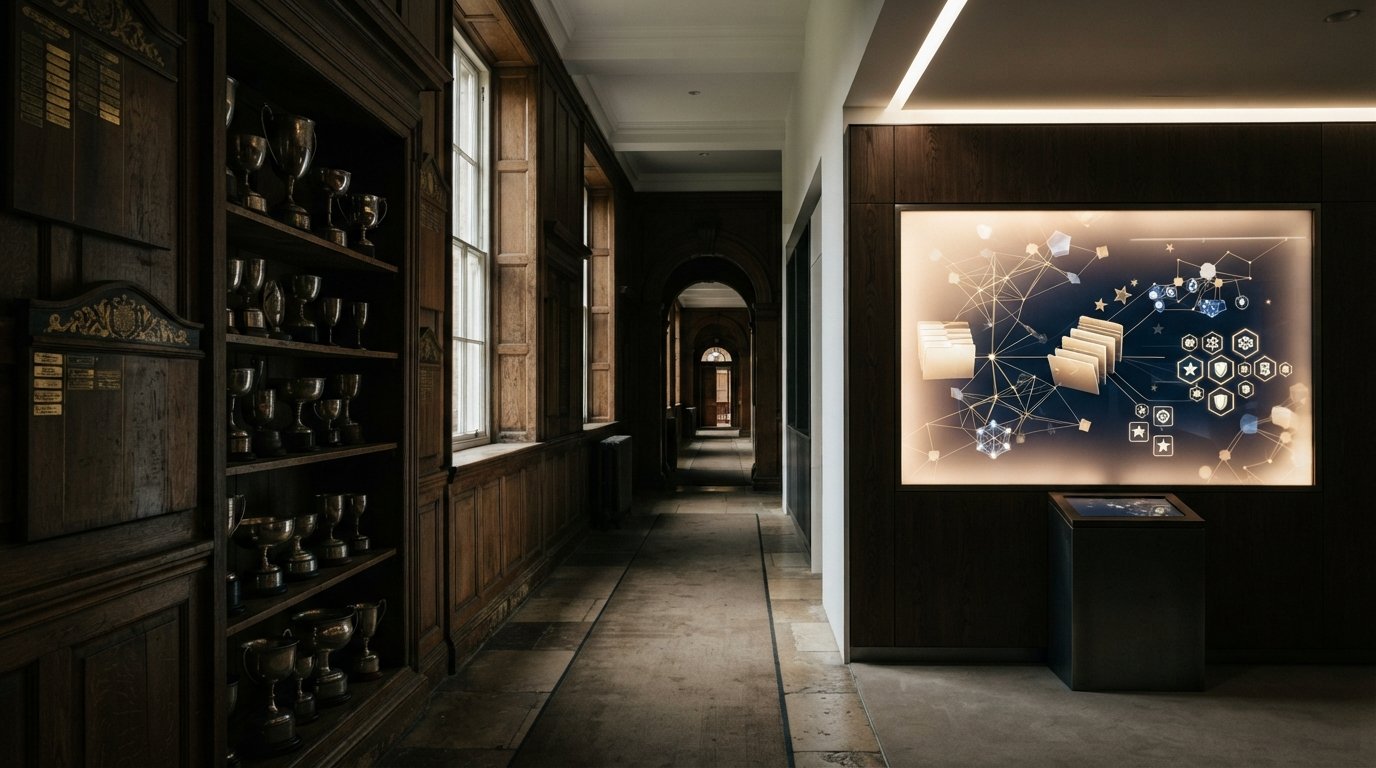
Within ten to fifteen years of installation, traditional trophy cabinets run out of physical space, quietly exiling over 70% of historical school awards to basements and storage cupboards. Creating a digital hall of fame for schools solves this spatial bottleneck, yet many institutions stall before they begin. The prospect of expensive touchscreen kiosks and hundreds of tedious hours spent hand-typing weathered engravings often feels completely overwhelming.
Honouring your school's legacy shouldn't require exhausting your administrative staff or budget. A lasting tribute thrives on structured, searchable heritage data rather than flashy, vendor-locked hardware. This 2026 guide shows you how to transform dusty display cabinets into interactive digital honours boards that re-engage alumni and celebrate student milestones. You'll learn the latest school heritage trends, modern data extraction techniques that bypass manual transcription, and practical strategies to launch an enduring platform accessible on campus and across the globe.
Key Takeaways
- Understand how a modern digital hall of fame for schools pairs on-campus interactive screens with cloud-accessible web directories, allowing alumni to search school archives from anywhere in the world.
- Discover why physical display cabinets and traditional signwritten wooden boards create an unsustainable spatial bottleneck, leaving decades of irreplaceable history locked away in storage.
- Compare physical honours boards, dedicated touchscreen kiosks, and cloud archives to evaluate long-term maintenance, accessibility, and hardware independence.
- Master the four-step audit and capture workflow that preserves historical records systematically without tying up administrative teams for weeks.
- See how specialised AI optical extraction converts curved silverware engravings and faded plaques into structured CSV files, safeguarding your institution's permanent data ownership.
Table of Contents
- What Is a Digital Hall of Fame for Schools in 2026?
- Why Leading Schools Are Replacing Physical Honours Boards
- Comparing School Hall of Fame Formats: Boards, Kiosks, and Cloud Archives
- How to Build a School Digital Hall of Fame: Overcoming the Data Bottleneck
- Future-Proofing Your School's Legacy with Trophy Guru
What Is a Digital Hall of Fame for Schools in 2026?
A modern digital hall of fame is an interactive, searchable multimedia archive designed to celebrate an institution's collective history. Rather than relegating student milestones to static metal cups or wood panels, this architecture combines physical campus displays with cloud-based web portals. It unifies academic honours, artistic contributions, sporting triumphs, and distinguished alumni stories into a single living repository.
By implementing established digital preservation principles, schools protect fragile institutional memory against physical decay while solving chronic foyer space constraints. The transition shifts recognition away from unreadable inscriptions toward dynamic student profiles equipped with photographs, ceremony context, and verified achievements.
From Locked Glass Cabinets to Interactive Heritage Displays
Traditional trophy cabinets face practical limitations. As decades pass, floor space runs short. Silverware tarnishes. Faded gold calligraphy on elevated oak boards becomes impossible to decipher from ground level. Most importantly, a static plaque offers zero context about the human story behind the award.
An interactive digital hall of fame for schools transforms passive onlookers into engaged researchers. Visitors can query specific graduation classes, filter by discipline, or read original match reports from half a century ago. Physical items remain honoured, but their underlying stories become universally visible.
Essential Components of a School Digital Recognition System
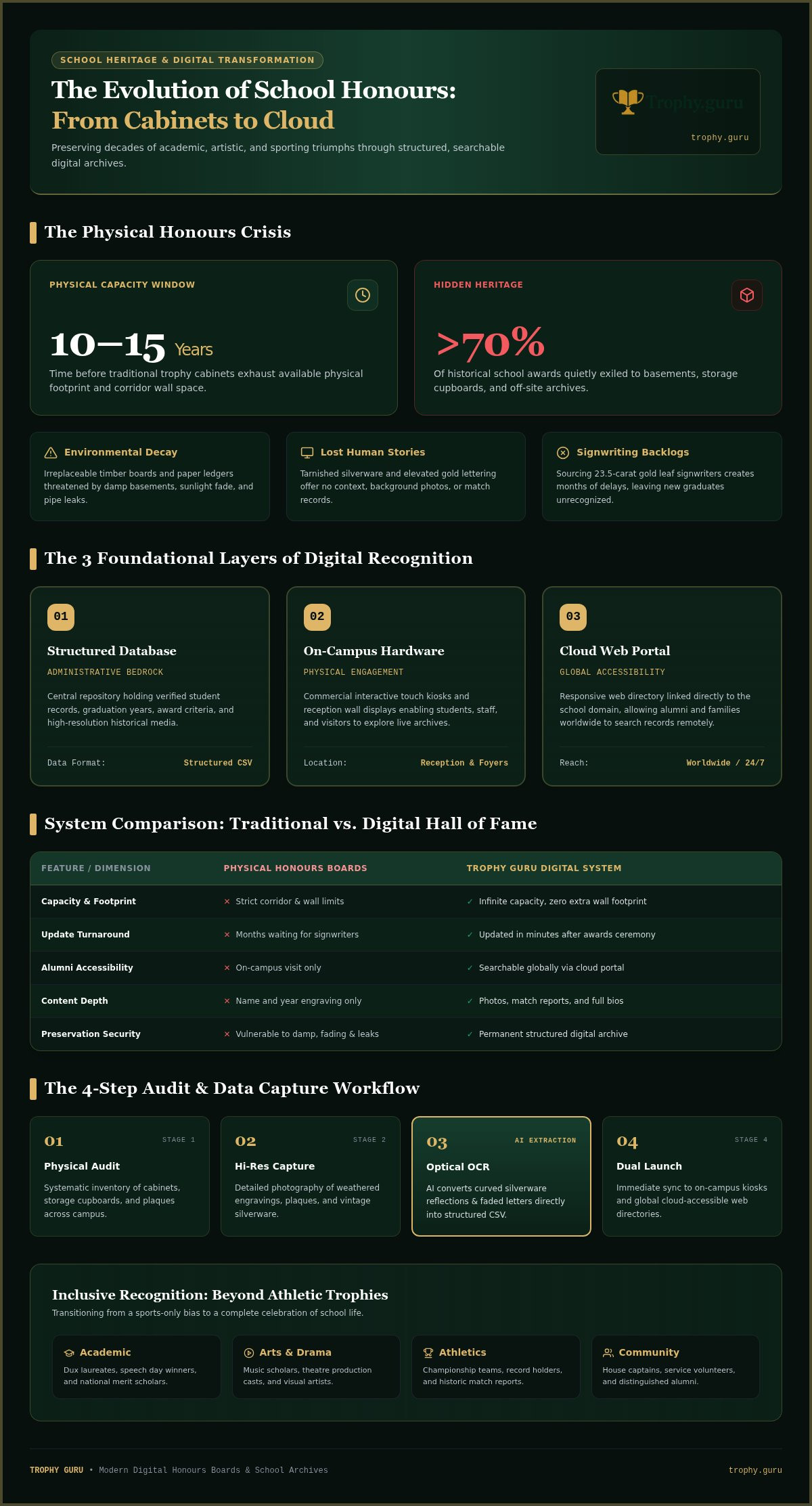
Building a successful digital hall of fame for schools requires three foundational layers working in harmony:
- A structured heritage database: The administrative bedrock containing verified student records, graduation dates, award categories, and high-resolution historical media.
- On-campus presentation hardware: Commercial touch kiosks or reception displays that let current students, staff, and campus visitors browse the collection in real time.
- A cloud-hosted public directory: A responsive, web-accessible archive linked to the school website, enabling alumni and prospective families across the globe to search records without stepping foot on grounds.
When these three layers align, schools eliminate the physical clutter of mounting endless new plaques. Legacy records stay organized, protected, and fully discoverable for generations to come.
Why Leading Schools Are Replacing Physical Honours Boards
Corridor real estate is finite. As historic schools accumulate decades of accolades, mounting additional timber panels becomes physically impossible. When institutions run out of wall space, older panels are inevitably relocated to archives or off-site storage. Transitioning to a digital hall of fame for schools removes these architectural constraints entirely, providing infinite capacity within a tidy footprint.
Equally pressing is the loss of historical records to environmental hazards. Damp basements, sunlight degradation, and burst pipes threaten irreplaceable timber boards and paper ledgers. Moving these records into a secure digital environment preserves institutional legacy against permanent loss.
Overcoming Facility Limits and Signwriting Delays
Traditional hardwood boards demand regular physical maintenance. Sourcing experienced signwriters who can replicate 23.5-carat gold leaf lettering has become exceptionally difficult. Schools often wait months for an artisan to visit campus, creating frustrating recognition backlogs for newly graduated cohorts.
Digital directories resolve these scheduling bottlenecks. School administrators can update student lists, house captain records, and major prizes within minutes of an awards evening. No scaffolding, paint fumes, or specialist signwriters required.
Expanding Recognition Beyond Athletic Trophies
Most school reception areas suffer from an unintentional sports bias. Polished cups and athletic shields dominate glass cabinets, while speech day laureates, music scholars, drama casts, and community volunteers remain largely invisible.
Modern educational guidelines for establishing a school hall of fame strongly encourage broad, inclusive representation across the entire student body. A digital platform offers dedicated tabs for:
- Academic Distinctions: Dux laureates, national olympiad entrants, and scholarship recipients.
- The Arts: Orchestral leaders, stage production leads, and visual art exhibition winners.
- Civic Leadership: Head prefects, community service honours, and debate champions.
- Athletics: First XI teams, individual records, and historic tournament victories.
Every student community gains equal prominence, turning the archive into a holistic reflection of school life.
Strengthening Alumni Relations and School Development
Alumni engagement directly impacts school development programs. During reunions, former pupils naturally gravitate toward their own cohort's records, recalling teachers and classmates. When this data lives exclusively on campus walls, international or out-of-town alumni remain disconnected.
Publishing your awards online via a hosted digital honours board bridges that distance. Former students can search their personal records from their mobile browsers, share achievements with family, and stay connected with the school's ongoing heritage initiatives.
Comparing School Hall of Fame Formats: Boards, Kiosks, and Cloud Archives
Every school must balance tradition against utility when selecting a recognition model. Traditional wooden boards project dignity, but their lack of searchability leaves decades of achievements obscure. Dedicated campus touchscreen kiosks provide visual impact in main reception foyers, yet they tie schools to proprietary hardware cycles. In contrast, cloud-hosted digital archives liberate institutional records, making them accessible across mobile devices, desktop browsers, and existing campus television screens.
The most resilient strategy adopts a hybrid architecture. Schools preserve their finest physical artefacts as historic monuments while directing detailed search inquiries through a modern digital hall of fame for schools.
Physical Wooden Boards vs Interactive Digital Screens
Physical timber panels preserve historical charm, but they cannot tell a complete story. A carved name cannot play a game-winning audio clip, display a graduation photograph, or link to an academic scholarship citation.
Interactive displays overcome these medium constraints. Following standard Library of Congress digitization guidelines, schools capture high-fidelity scans of historical team photographs, match programmes, and speech night booklets. These multimedia assets attach directly to student records, enriching bare names with living historical colour.
Proprietary Touch Kiosks vs Cloud-Based Honours Boards
Early institutional digitization projects often invested in custom touchscreen enclosures running bespoke software. While visually striking on opening day, these closed kiosks introduce long-term liabilities:
- Hardware obsolescence: Proprietary internal motherboards and touchscreen overlays routinely face component failure within three to five years.
- IT maintenance overhead: On-site hardware requires ongoing local network patches, driver updates, and physical troubleshooting.
- Physical confinement: A localized kiosk limits viewing strictly to individuals standing in the school reception area, locking out international alumni.
Cloud-native archives avoid these traps entirely. Because the platform renders via standard web browsers, schools can display honours lists on any commercial monitor or digital signage player already hanging on campus walls.
Maintenance, Durability, and Long-Term Ownership
Institutional continuity requires administrative simplicity. If adding new awards requires contacting third-party developers or writing code, updates fall behind quickly. Intuitive cloud systems allow administrative staff to input records via simple spreadsheets or web forms in minutes.
Crucially, schools must protect themselves against vendor lock-in. Avoid closed software ecosystems that trap your heritage data inside proprietary databases. Demanding full access to clean CSV archive exports ensures your school retains permanent, sovereign ownership of its history, regardless of which front-end display technology you deploy. For a detailed breakdown of procurement considerations, review our buyer's guide for school recognition boards.
How to Build a School Digital Hall of Fame: Overcoming the Data Bottleneck
The primary hurdle in building a digital hall of fame for schools isn't sourcing display screens. The real stumbling block is the historical data bottleneck. Decades of student accolades sit trapped on tarnished silver, curved chalices, and fading oak boards. Converting these physical inscriptions into structured digital assets requires a methodical, five-step transition:
- Audit all physical trophies, shields, and honour boards across campus.
- Capture sharp digital reference photographs of every engraved plate and inscription.
- Extract names, dates, and award titles into structured records.
- Standardise records into a searchable hierarchy of categories, years, and houses.
- Publish the database to responsive on-campus displays and remote web archives.
Auditing Your School's Physical Silverware and Archive Collections
School silverware rarely stays in one place. Trophies drift into departmental offices, sports pavilions, and forgotten storage cupboards. Begin by gathering your artefacts into a central inventory. Record physical conditions, hallmarks, and donor inscriptions before moving items. For a complete step-by-step audit framework, follow our practical guide to digitising school trophy records.
The Reality of Manual Data Entry vs Automated Transcription
Manually deciphering and typing 500 historic award records can devour 150 to 250 staff hours. Reflections on curved silver, tarnished metal, and ornate cursive engraving fonts inevitably trigger transcription errors, misidentifying past alumni.
AI-powered optical extraction solves this data bottleneck. Specialized vision models read shallow, weathered lettering directly from smartphone photos, turning weeks of manual typing into structured digital archives within seconds.
Structuring Metadata for Seamless Searching and Discovery
Unstructured data frustrates visitors. To make your digital hall of fame for schools truly functional, establish consistent taxonomy across every record:
- Core Identifiers: Standardise student names, graduation years, and house affiliations.
- Discipline Categories: Group records under academics, performing arts, sports, and civic leadership.
- Historical Context: Link donor histories, match reports, and high-resolution trophy photography.
Explore our comprehensive guide on managing school trophy databases for advanced taxonomy structures. When you're ready to liberate your school's physical awards without manual data entry, test your first transcription free with Trophy Guru.
Future-Proofing Your School's Legacy with Trophy Guru
Preserving institutional heritage shouldn't stall under the weight of manual data entry. Trophy Guru functions as the data-liberation engine that transforms physical silverware and faded wall plaques into structured digital assets. By resolving the transcription barrier directly, schools can launch a comprehensive digital hall of fame for schools without pulling staff away from core educational priorities.
Rather than replacing physical traditions, modern archiving strengthens them. Silver trophies remain proudly displayed, but their historical value becomes unlocked and accessible to your entire community.
Automated AI Transcription for School Silverware and Boards
Capturing your archive begins with simple smartphone photography. School staff photograph trophies, shields, and timber boards right where they sit, avoiding the risk of transporting fragile artefacts.
Once uploaded, specialised optical AI models analyze the imagery. Unlike ordinary document scanners, this engine is purpose-built to read shallow, reflective text etched into curved silver chalices, brass plates, and aged gold-leaf lettering. The system extracts names, dates, and competition titles into structured rows. An intuitive verification screen allows your team to review and confirm details with a single click, ensuring pristine historical accuracy.
Hosting Searchable Digital Honours Boards Without Complex IT
Once digitized, your school's history needs an intuitive home. Trophy Guru provides hosted digital honours boards that deploy effortlessly without complex software installations or bespoke network hardware. The platform operates seamlessly across existing reception monitors, interactive library kiosks, and personal smartphones.
Current students can explore past achievements during breaks, while alumni living anywhere in the world can search their personal milestones by year, award category, or house. Crucially, your school never faces vendor lock-in. Full CSV archive exports ensure your institution retains complete, permanent ownership of its historical records forever.
Protecting your school's legacy doesn't have to be a multi-month ordeal. To see how quickly your physical silverware converts into a searchable digital archive, try your first trophy transcription for free.
Bring Your School's Heritage into the Digital Era
Building a modern digital hall of fame for schools bridges cherished tradition with everyday accessibility. You don't need expensive hardware installations or months of tedious typing to liberate historic honours from dusty storage cupboards. By embracing cloud-native archives, your institution can celebrate achievements across academics, the arts, and athletics while reconnecting with alumni worldwide.
Trophy Guru removes the administrative bottleneck from day one. Utilizing AI transcription specifically trained on curved silverware and reflective trophy engravings, our engine converts physical artefacts into structured digital records within seconds. Full CSV export capability ensures your school always owns its archival data, safeguarding your institutional memory against vendor lock-in. Take the first step toward safeguarding your legacy. Digitize your school's history with Trophy Guru today by testing your first trophy transcription completely free with zero commitment.
Frequently Asked Questions
What is a digital hall of fame for schools and how does it work?
A digital hall of fame for schools is an interactive, searchable multimedia repository that celebrates student and alumni milestones. It works by converting physical inscriptions from silverware, plaques, and wooden boards into structured database entries. Current students and visitors explore these records via campus displays, while alumni access them through web directories. Users can filter results by graduation year, activity, or student name to uncover detailed historical context.
How do schools digitize hundreds of old trophies without manual typing?
Schools photograph their physical trophies, plaques, and wooden boards using standard smartphones rather than hand-typing records. Platforms like Trophy Guru utilize specialized optical AI trained to decipher curved silverware, tarnished metal, and decorative gold-leaf lettering. The software automatically extracts student names, years, and categories into editable rows. Staff simply verify the transcription on an intuitive verification screen, completing in seconds what previously took weeks of manual data entry.
Can a digital hall of fame include academic and artistic achievements as well as sports?
Yes, modern platforms fully unify achievements across all disciplines rather than prioritizing athletic silverware alone. Schools create dedicated categories for academic awards, music scholars, drama productions, debating honours, and community service. Because digital archives don't suffer from physical display cabinet constraints, every department receives equal visibility. This comprehensive approach ensures that all student communities find their contributions permanently documented, recognized, and celebrated across the school's history.
Do we need to buy expensive touchscreen kiosks to set up a digital honours board?
No, purchasing custom touchscreen enclosures isn't necessary. Cloud-native honours boards operate through any standard web browser, allowing schools to use existing digital signage, standard commercial television monitors, or communal library computers. This decoupled approach prevents vendor lock-in, eliminates costly hardware repair contracts, and ensures your recognition board remains completely accessible across smartphones, tablets, and desktop computers without demanding specialized IT maintenance or proprietary hardware investments.
What happens to our physical wooden boards and silver trophies after digitization?
Digitizing your awards doesn't mean discarding your physical heritage. Institutions typically retain their most historic silverware and wooden boards as permanent decorative monuments in main halls or reception foyers. However, digitizing allows schools to safely retire overcrowded overflow boards to archival storage without erasing their history. Every name remains permanently searchable online, freeing up valuable wall space while protecting fragile timber and silverware against physical degradation.
How can alumni access the school's digital hall of fame from outside campus?
Alumni can browse your digital hall of fame for schools directly through any standard web browser on a smartphone, tablet, or laptop. By embedding the cloud archive into your school website or alumni portal, former pupils worldwide can instantly search their cohort, view archived team photographs, and share historical milestones. This remote accessibility transforms stationary physical awards into dynamic storytelling assets for reunions and development outreach.
Can we export our school's historical records if we change systems in the future?
Yes, retaining complete data ownership is essential for long-term institutional preservation. Reliable archiving platforms provide clean CSV archive exports containing all student names, award titles, dates, and category tags. This format portability ensures your school never gets trapped inside a closed proprietary software ecosystem. You maintain permanent, independent control over your school's history, allowing you to migrate, back up, or repurpose your records at any time.