
What if the best way to preserve your club’s history is to pause before digitising anything? Organizing sports club archives is more manageable when you first decide what matters, where records are held and how people will find them. A clear plan can prevent a well-intentioned project from becoming a pile of scans no one can search.
If photographs are in one cupboard, results in old spreadsheets and trophy details in a volunteer’s notebook, you’re not alone. It can be hard to know what to keep or describe, and important context may disappear when long-serving members move on. The answer isn’t to tackle everything at once. Start with what the club has and what future members may need.
This guide will help you build a practical inventory, choose a consistent structure and set routines for care, access and future additions. You’ll work through the project step by step, from setting a sensible scope to recording what you hold and deciding where digital tools can help. The aim is a useful, sustainable archive that honours the club’s history without overwhelming the people looking after it.
Key Takeaways
- Start organizing sports club archives by defining what the archive needs to help members find and use.
- Build an inventory by locating, grouping and describing records, then noting their condition and next action.
- Choose one main filing approach and apply consistent naming rules across physical and digital records.
- Set clear access arrangements, and review personal information and permissions before sharing material.
- Make progress one collection at a time; digitise records when it improves discovery, not simply for the sake of scanning.
Table of Contents
Organising sports club archives starts with a clear purpose
Club history rarely sits in one place. Minutes may be in a filing cabinet, photographs on a shared drive, awards in the clubhouse and older records in former volunteers’ homes. Before an anniversary prompts a rush to gather everything, agree what the archive is for. Organizing sports club archives means making records findable and useful, not digitising every item at once.
A club archive is the records, photographs, awards and other objects kept because they provide evidence of the club’s activities and history. For a broader introduction to what an archive is, it helps to think beyond boxes of old paperwork: an archive can include material in different formats, created and collected over time.
An inventory says what you have and where it is; it isn’t a complete catalogue or a digitised collection. That distinction keeps the first stage achievable. You can record the broad outline of a collection before deciding which items need fuller description, careful handling or digital access.
Set the archive project’s purpose and boundaries
Start with the club’s needs. Is the archive supporting anniversary planning, helping with governance, enabling historical research or making selected material available to members? These aims can overlap, but agreeing a priority helps the committee make practical choices.
Then define the first phase. For example, you might focus on records from a particular period, one activity such as junior teams, or one format such as photographs. Choose a pilot collection that’s small enough to review and varied enough to test your approach. Learn from that first batch before expanding the project.
Agree roles before records begin moving
Name a project lead to coordinate the work, and agree who can approve access or disposal decisions. Don’t move or discard records simply because they look worn, duplicated or unimportant. If an item’s value or ownership is unclear, note the uncertainty and pause for review.
Ask current and former volunteers where material may be held, including personal collections and club storage. Record who shared the information, what still needs checking and what decisions the committee made. A short set of notes can preserve context when volunteers change, and helps the next person continue without having to retrace every conversation.
Build a reliable inventory of sports club records
Once the project has a defined scope, create a working inventory before rearranging or digitising material. A consistent record of what exists, where it is and what needs attention gives volunteers a shared starting point, even if some details remain unknown.
A basic inventory maps the collection; detailed cataloguing describes individual items, and digitisation creates digital copies. Treat these as separate stages. The inventory can be brief, but it should make each group of records possible to locate again.
Follow a simple inventory sequence
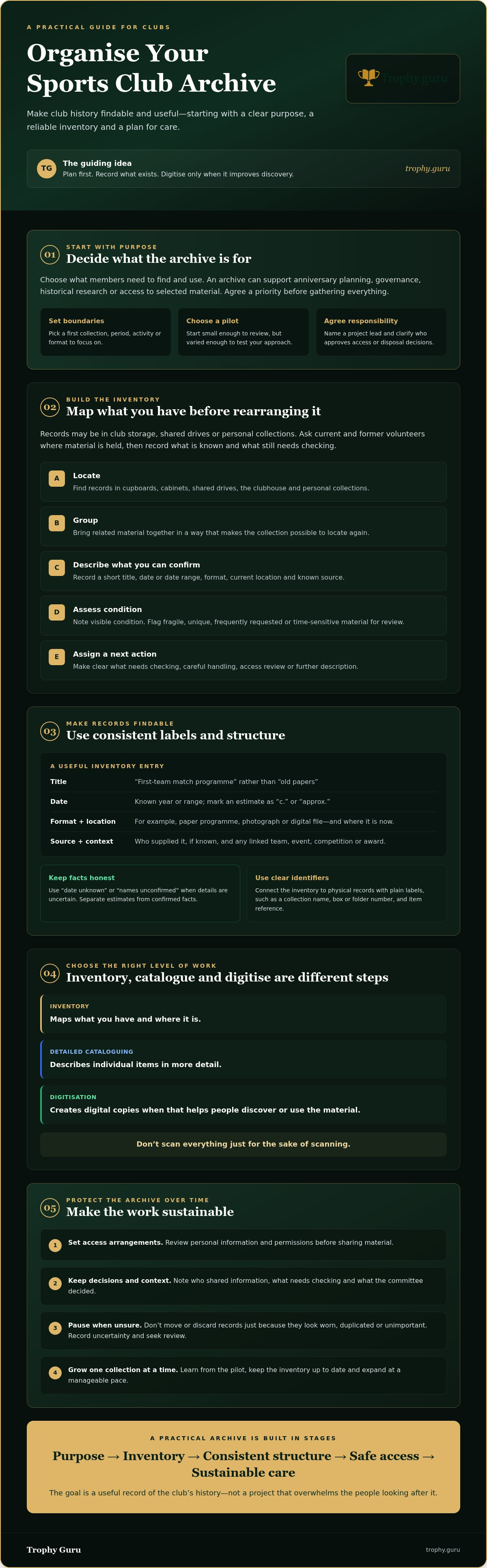
Work through the collection in order: locate records, group related items, describe what you can confirm, assess their condition and assign a next action. Use a spreadsheet or another simple shared record, provided volunteers can keep it up to date.
For each entry, capture a short title, a date or date range, format, current location and known source. Add a clear identifier, such as a collection name followed by a box or folder number and an item reference. Plain labels make it easier to connect the inventory to the physical records.
- Title: “First-team match programme” is more useful than “old papers”.
- Date: Record a known year or range; mark an estimate as “c.” or “approx.”
- Format and location: Note whether it’s a paper programme, photograph or digital file, and where it is now.
- Source and context: Record who supplied it, if known, and any linked team, event, competition or award.
Keep confirmed facts distinct from estimates. If a photograph’s date or people’s names aren’t known, write “date unknown” or “names unconfirmed” rather than guessing. A visible note of what needs checking is more useful than false certainty.
Assess and assign the next action
Describe visible condition without trying to repair or treat an item. Flag material that appears fragile, unique, frequently requested or time-sensitive for review. These flags help the club distinguish an immediate care concern from a longer-term digitisation queue.
Handling matters too. For practical guidance on storing and working with paper and photographs, see the archiving tips from the University of Arizona. If the inventory includes trophy or honours board details, digital transcription may help make names and years easier to search. It’s one option within the wider project; Trophy Guru’s trophy transcription service is focused on those records.
Don’t discard apparent duplicates or records containing personal information during the inventory. Mark them for review and follow the club’s agreed policy before deciding what to retain, restrict or remove. A careful inventory makes those decisions easier to track and explain.
Choose a structure that makes club history easy to find
A good archive structure reflects how people look for information. A member preparing an anniversary display may search by season, while a committee member may need a set of meeting minutes. There’s no single filing system that suits every club, so choose one main logic and use descriptions and cross-references to support other ways of searching.
Three common approaches each have trade-offs:
- Chronological: Arrange records by year or season. This makes a timeline easier to follow, but can separate material about the same activity across different periods.
- Activity-based: Group by teams, competitions, governance, events or awards. This suits people looking for a particular part of club life, but some items may relate to more than one category.
- Format-based: Keep photographs, documents, objects and digital files in separate groups. This can help with storage and care, but may make it harder to bring together records about one event.
For organizing sports club archives, use one approach as the primary filing structure, then add cross-references for useful alternatives. For example, file a team photograph under the relevant season or team, and note a competition or event in its description. Keep categories broad enough that volunteers won’t need to navigate a long, complicated folder tree.
Group records around how members search
Think about the questions members are likely to ask: which season, team, competition or event? Start with a small set of broad categories, such as seasons, teams, competitions, governance, photographs and awards. Add a new category only when it helps people find material consistently. One item can have several search details without being filed in several places.
Use consistent names and descriptions
Apply the same naming rules to folders, boxes and digital files. A simple file pattern might be YYYY-MM-DD_short-description_identifier. Use only dates and names the club has verified; leave unknown details blank or label them as unknown. Avoid placing sensitive personal details or unverified names in filenames that could be visible to a wider audience.
Descriptions can use basic metadata, meaning information that helps identify and search for a record: its title, date, people, event, format and source. A short guide should explain abbreviations, date conventions and how to mark uncertainty, so records stay understandable when volunteers change.
| Title | Date | People | Event | Format | Source |
|---|---|---|---|---|---|
| [Short title] | [Year or unknown] | [Verified names or unknown] | [Event or not recorded] | [Photograph, paper, object or digital file] | [Known donor or source] |
This example is a template, not a record of club history. Consistent fields make the collection easier to search without forcing every item into a detailed description straight away.
Protect access, privacy and continuity as the archive grows
A useful archive isn’t necessarily an open archive. Some records may be suitable for general member access, while others need restricted handling or a review before they’re shared. Set access rules alongside the archive structure so people know what they can view, change or publish.
Set sensible access and review rules
Agree who can view each record group, who can edit descriptions and who can approve sharing or changes. Before making photographs or documents publicly accessible, check for personal details, permissions and material created by someone outside the club. A record being old doesn’t automatically mean it’s suitable for unrestricted publication.
Clubs handling personal information should check the UK requirements that apply to their circumstances, including the UK GDPR and Data Protection Act 2018. Consider what information is necessary, why it’s being kept and who should be able to access it. If the club is unsure about data protection, copyright or permissions, seek qualified guidance rather than relying on guesswork.
Digital copies can make records easier to search, share with approved users and consult without handling an original each time. They don’t replace the original, and a file alone doesn’t guarantee long-term access. Keep physical items in a suitable, stable place, and maintain clear links between each digital copy and its location in the archive. For digital records, document where they’re stored and who is responsible for maintaining access.
Make the system resilient to volunteer turnover
Assigning responsibility is a practical safeguard: records are easier to find and care for when someone knows who maintains the system. Name an archive contact, but make sure the process doesn’t depend on that person’s memory or personal equipment.
Keep a brief, current guide that explains storage locations, naming conventions, access arrangements and who approves changes. Schedule regular checks to identify missing or damaged items, review access decisions and add newly donated material. Make sure relevant accounts and records are managed for the club, with an agreed handover process, rather than existing only on one volunteer’s personal device.
Digital tools can support discovery for specific collections. For example, Trophy Guru can help clubs create searchable records from trophy and honours board details, with records available for CSV export. This is one part of archive management, not a replacement for deciding who may access information or how the wider collection is cared for. Explore digital trophy transcription as an option for making those honours easier to find.
Turn the organised archive into a useful club resource
An organised archive earns its place when it helps someone answer a question, prepare an anniversary display or understand how the club has changed. Choose one collection and improve its descriptions before widening access. A set of award records, for example, may become easier to use once each entry has a checked name, year and award title.
Digitisation can help when people need to search, share or consult records without handling physical originals. But converting everything isn’t necessary. Prioritise material where a digital copy will solve a clear problem, such as finding results across seasons or checking names on awards. Keep the inventory as the guide to what exists and where originals are held. For a wider planning framework, see the club history preservation checklist.
Choose digital tools to solve a defined archive need
Before choosing a tool, state the task it must support: searching names, finding dates or making award records easier to consult. Trophy Guru transcribes trophy, plaque and honours board images into searchable records. Those records can be browsed in an online archive or exported as a CSV file for handling the data outside it. This is a focused option for award-related information, not a substitute for deciding how the club will organise its wider collection.
If awards are a priority, the sports club award records guide offers a next step for considering their digitisation. As with any digital record, check descriptions against the available source and follow the club’s access arrangements before sharing information more widely.
Review progress and plan the next collection
Keep progress visible with straightforward status labels: located, described, reviewed, digitised or awaiting a decision. These show what has moved forward and where follow-up is needed. Ask members and researchers to try finding a particular season, event or result, then note where the structure or descriptions caused difficulty.
Use that feedback to refine the system before bringing in another collection. This measured approach keeps organizing sports club archives manageable and helps the club build a resource people can actually use. If award inscriptions are part of your project, you can try one trophy transcription free. One initial trophy transcription is available free, making it an optional way to explore searchable award records within the wider archive plan.
Start building an archive your club can carry forward
A lasting club archive doesn’t require every record to be digitised before it becomes useful. Set a clear purpose, make an inventory, and choose a structure volunteers can maintain. Then agree who can access records and who will keep the system current as people and collections change.
That steady approach makes organizing sports club archives achievable, while helping members discover the people, events and achievements behind the club’s history. Start with one collection, learn what helps people find information, and expand when the process is working.
For trophy and honours board inscriptions, Trophy Guru uses AI-assisted transcription to create searchable digital records. The archive can be browsed online, and records can be exported as a CSV. Try one trophy transcription free, with one initial trophy transcription available at no cost.
Every clear description and well-kept record gives future members a stronger connection to the club’s story. Begin with the next manageable step.
Frequently Asked Questions
How do you start organising a sports club archive?
Start by agreeing what the archive should help the club do, then choose one manageable collection to review. Assign a project lead and create a basic inventory with each item’s description, date if known, format and location. Record uncertainties rather than guessing names or dates. This gives volunteers a practical foundation for organizing sports club archives without requiring them to digitise every record straight away.
What should a sports club archive include?
A sports club archive can include records that document its activities and history, such as meeting minutes, programmes, photographs, results, awards, correspondence and publications. The right scope depends on what the club wants the archive to support and the resources available to care for it. Start with material the club holds or knows about, and note its source and context. Not every item needs to be retained or shared publicly.
How do you organise old sports club records?
Group records using one clear system, such as season, activity or record type, then apply it consistently. Make an inventory with titles, dates where known, formats and locations so volunteers can find items again. Preserve context, such as the team or event associated with a photograph, and mark uncertain details clearly. Record decisions before moving or discarding material, and seek suitable advice if an item needs specialist care or rights review.
Should a sports club digitise its archive before organising it?
Usually, it’s more manageable to define the project and make a basic inventory first. This shows what exists, where it is and which records may benefit most from digital access. The club can then prioritise digitisation rather than treating it as an all-or-nothing task. Keep a clear connection between each digital copy and its physical original, including where the original is stored, so the copy remains useful without replacing the source.
How can a club make archive records searchable?
Use consistent descriptions and fields such as title, date, people, event, format and source. Apply the same naming conventions throughout, and mark unknown details instead of guessing. For trophy and honours board inscriptions, AI-assisted transcription can turn names, years and details into searchable records. Trophy Guru provides an online archive that can be browsed, with records exportable as CSV. Review information and permissions before sharing records more widely.
How often should a sports club review its archive?
Choose a review rhythm volunteers can maintain, such as checking the inventory whenever new material arrives and reviewing the system periodically. Confirm that locations are still accurate, access remains appropriate and responsibilities are clear after committee changes. Avoid reorganising for its own sake. Record updates and decisions, including what changed and why, so the next volunteer can understand the archive’s history and continue maintaining it without relying on someone else’s memory.