
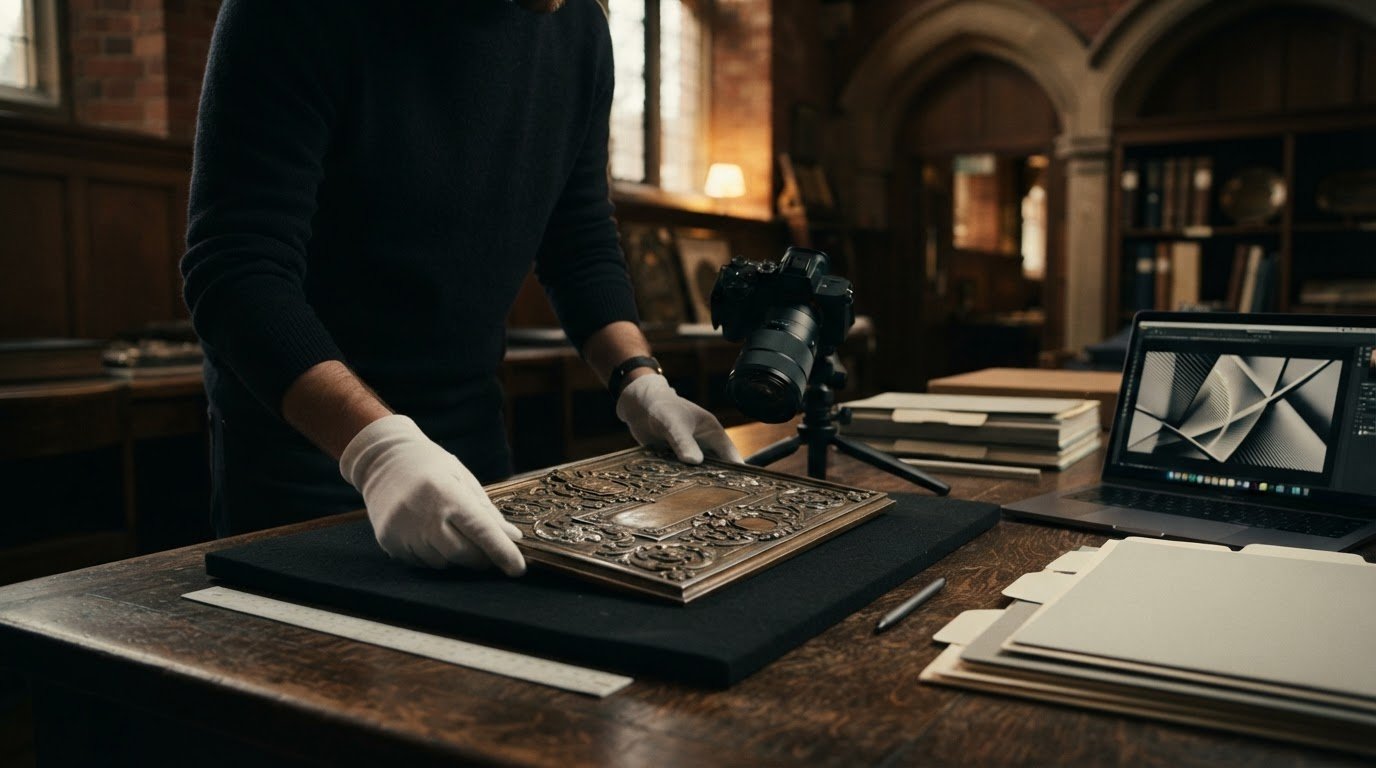
What good is a carefully preserved inscription if its location, purpose and story are forgotten? To archive commemorative plaques effectively, you need more than a photograph. Wording can be difficult to read, details may be scattered across old records, and an image alone may not explain what makes a plaque significant. A consistent record keeps each plaque connected to the people and events it honours.
If you’re responsible for a club, school or community collection, manual transcription and record-keeping can quickly become time-consuming. This guide explains what to record, how to photograph and transcribe each plaque, and how to preserve context without presenting uncertain details as facts. It also covers ways to organise records and use AI-assisted transcription to make inscriptions easier to search. The goal is a practical digital record that supports, rather than replaces, care of the physical plaques and the stories they carry.
Key Takeaways
- To archive commemorative plaques consistently, assign each one an identifier and record its inscription, location and related context.
- Use the same process to photograph, transcribe and review each plaque, marking uncertain wording instead of guessing.
- Choose a record-keeping method that suits your collection, and consider how search and maintenance needs will change as it grows.
- Separate verified facts from attributed accounts and open questions so future readers can see what the record establishes.
- AI-assisted transcription can turn plaque photographs into searchable records, but review extracted details and add context to make them more useful.
Table of Contents
- Why archive commemorative plaques beyond taking a photograph?
- How to archive commemorative plaques: a reliable step-by-step workflow
- Paper register, spreadsheet or digital archive: which suits plaque records?
- How to keep plaque records accurate, contextual and useful over time
- Turn plaque photographs into searchable records with Trophy Guru
Why archive commemorative plaques beyond taking a photograph?
A photograph shows what a plaque looks like at a particular moment. It may not explain why it was installed, who commissioned it, where it was originally placed or how its story connects to people and events. Details may be scattered across meeting minutes, local histories, newspaper cuttings and the memories of an organisation’s members. Without a structured record, the image may survive while its meaning becomes harder to recover.
Commemorative plaque describes an object that marks a person, event or place. An archive adds useful connections between each plaque, its inscription, images, location and supporting historical information. A plaque archive is an organised set of records that links each commemorative object to its wording, whereabouts and documented history, making those details easier to find and interpret.
What should a commemorative plaque record include?
Give each plaque a stable identifier, such as a reference code that won’t change if the plaque moves or its display arrangement changes. Record the exact inscription, plaque type and current location. Add known details about its installation or dedication date, the person or event commemorated, the commissioning body and any sources used to establish that information.
Make uncertainty visible. Mark text as illegible, information as unknown or a detail as disputed rather than filling gaps by assumption. If a date comes from meeting minutes or someone’s recollection, note the source so future readers can assess the evidence for themselves.
How does an archive differ from a collection of plaque photographs?
Images become more useful when each is linked to a consistent record. A search for a person’s name, a year or a location can then lead to the relevant inscription and source notes, rather than requiring someone to open files one by one and recognise the plaque by sight.
Link each photograph to the transcription and context. Note what the image shows, such as the full plaque or a close-up of difficult wording. This creates a clear connection between the object and its record, and helps distinguish what can be read directly from the plaque from details established through other sources.
Digital documentation supports care of the physical object; it doesn’t conserve or restore it. A record can help an organisation track a plaque’s location and retain information if it moves or becomes difficult to read, while the object still needs appropriate physical care. To archive commemorative plaques well, preserve both the evidence in the images and the context that gives the inscriptions meaning.
How to archive commemorative plaques: a reliable step-by-step workflow
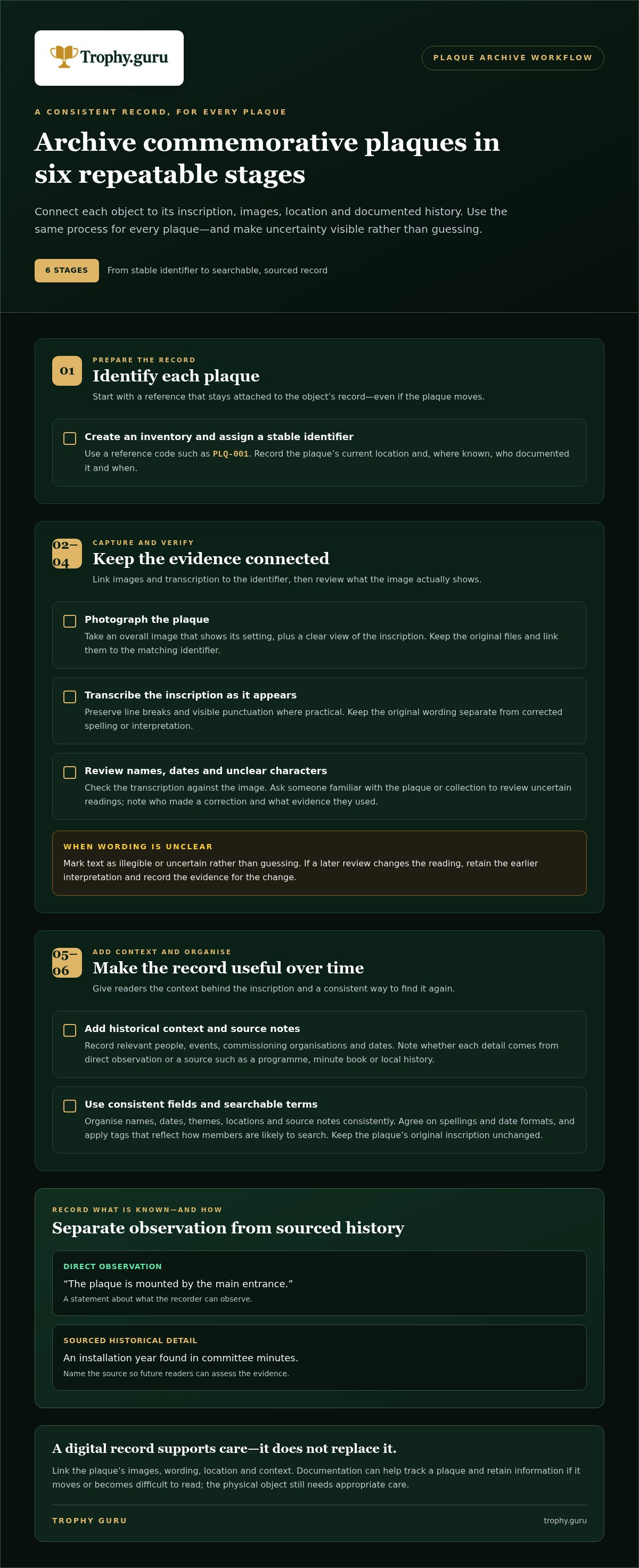
A repeatable process keeps records consistent, even when several people contribute. Before you archive commemorative plaques, decide how each record will be identified and which details your organisation will capture. Then follow the same stages for every object.
- 1. Create an inventory. Assign each plaque a stable identifier, such as PLQ-001, before creating its digital record. Note its current location and, where known, who documented it and when.
- 2. Photograph the plaque. Take an overall image that shows its setting, plus a clear view of the inscription. Keep the original files and link them to the matching identifier so each image stays connected to the correct record.
- 3. Transcribe the inscription. Copy the wording as it appears, preserving line breaks and visible punctuation where practical. Keep the original text separate from any corrected spelling or interpretation.
- 4. Review the transcription. Check names, dates and ambiguous characters against the image. Ask someone familiar with the plaque or collection to review uncertain readings, and note who made each correction and what evidence they used.
- 5. Add historical context. Record relevant people, events, commissioning organisations and dates. Note whether each detail comes from direct observation or a source such as a programme, minute book or local history.
- 6. Store and organise the record. Use consistent fields for names, dates, themes, locations and source notes. Agree on spellings and date formats to make records easier to search, while keeping the plaque’s original inscription unchanged. Apply tags that reflect how members are likely to look for information.
Uncertain text is useful evidence too. Mark what can’t be read clearly rather than guessing and turning uncertainty into a false fact. If a later review resolves a reading, retain a note of the earlier interpretation and the evidence for the change instead of silently replacing it.
Keep observations separate from researched claims. “The plaque is mounted by the main entrance” is an observation. An installation year found in committee minutes is a sourced historical detail. This distinction helps future readers understand what the record shows directly and what it reports from another source.
Digital documentation is separate from physical conservation. A record can help an organisation track a plaque’s location and retain information if it moves or becomes difficult to read, while the object still needs appropriate physical care. AI-assisted transcription can help organise wording from uploaded plaque photographs, but review and context remain essential to a reliable record. Explore searchable plaque transcription and archiving to support this workflow.
Paper register, spreadsheet or digital archive: which suits plaque records?
The right format depends on how many plaques you’re documenting, how many people maintain the records and how often details change. A paper register may work well for a small, stable collection. As records grow, finding a name or comparing entries can take longer. Spreadsheets add structure and make information easier to sort, but contributors need to follow the same fields and conventions.
A searchable digital archive can bring inscriptions, photographs and contextual notes together in one record. Members can search for a name, year, location or subject when that detail has been recorded. Use this comparison to weigh the day-to-day trade-offs:
| Format | Searchability | Consistency | Access | Upkeep |
|---|---|---|---|---|
| Paper register | Manual lookup; harder as entries grow | Depends on a shared layout | Available where the register is kept | Handwritten updates and careful storage |
| Spreadsheet | Sort and search entered fields | Good with agreed columns and formats | Depends on how the file is shared | Needs regular updates and file management |
| Digital archive | Search across recorded details | Consistent fields can connect text and images | Records can be accessed digitally | Needs review and ongoing record maintenance |
When is a paper or spreadsheet register enough?
Choose paper if the collection is small, one person maintains it and updates are occasional. A spreadsheet may suit a growing register or several contributors, provided everyone follows the same field names and date formats. Agree on these conventions first, and include a source note for each transcription or historical claim. Otherwise, entries can become difficult to compare or verify.
To make digitisation manageable, begin with one shelf, room or plaque category rather than tackling the whole collection at once. Refine the record fields as you learn what members need to find, then apply the settled approach to the next group.
What makes a searchable digital archive more useful?
Search works best when key details are recorded consistently, including a person’s name, an event year, a location or a subject tag. Linking each image to its transcription and context means members don’t have to rely on filenames or recognise a plaque from a picture. Structured records can also be reused beyond the archive. Trophy Guru supports CSV archive export, so organisations can work with their organised data elsewhere.
Whichever format you choose, keep the record structure simple enough for contributors to maintain. A useful system helps people find a plaque and understand its record without adding unnecessary work.
How to keep plaque records accurate, contextual and useful over time
A trustworthy plaque archive makes it clear what was read directly, what came from another source and what remains uncertain. A short review routine can catch mistakes without turning each update into a research project. Use this checklist when adding or revising a record:
- Transcription: Check names, dates and unclear characters against the original image. Keep the original wording available.
- Attribution: Record who transcribed or reviewed the entry and when.
- Sources: Link contextual claims to their source, such as an organisation record or published history.
- Images: Make sure the original photograph remains linked to the correct plaque record.
- Status: Distinguish verified facts from attributed accounts and unresolved questions.
For example, a dedication date visible on the plaque is a direct observation. A date found in meeting minutes is a sourced claim. A recollection from a former member can be valuable too, but label it as an attributed account rather than presenting it as independently verified fact. This distinction preserves useful stories while showing readers how each detail is supported.
How can an organisation reduce transcription and metadata errors?
Check extracted or manually entered text against the source image, paying particular attention to names, dates and characters that could be read in more than one way. Note the reviewer and the source used to check historical details. If a transcription changes, keep the original photograph and record the reason for the correction. This gives a later editor a way to follow the evidence instead of relying on an unexplained replacement.
Set a simple correction process: check whether a record already exists before creating a new one, log changes and update the location field when a plaque moves. Keep the original identifier so the record remains traceable even when its details change.
How should the archive stay maintainable as the collection grows?
Assign someone to oversee the records and establish a repeatable way for contributors to submit additions or corrections. Use consistent names, categories and date formats, and agree how often to export a copy of the structured data. Start with a representative group of plaques, then refine the fields and review steps before expanding the archive. A manageable process is more likely to be maintained than an elaborate system no one has time to use.
Set access according to your organisation’s needs. Decide which records and images are for internal use and which can be shared more widely, and consider permissions for photographs or supporting materials before publishing them. For searchable plaque records with AI-assisted transcription and CSV export, explore Trophy Guru’s digital archive.
Turn plaque photographs into searchable records with Trophy Guru
Once you’ve gathered plaque photographs, you can make their wording easier to find and review. Trophy Guru uses AI-assisted transcription to extract names, years and other details from uploaded photographs, helping turn images into searchable digital records. This can reduce the effort of typing each inscription by hand, while review and added context help make each record more useful.
What happens when plaque photographs are turned into records?
Upload photographs of plaques as source material for transcription. The system reads visible text and extracts details that can be organised in the archive. Clear images make the process easier, but surface reflections, lighting, lettering and image quality can affect what’s readable. Treat AI-assisted transcription as a starting point, not a guarantee of a perfect reading.
Review extracted names, dates and inscription wording against the photograph. Check ambiguous characters and mark text that remains unclear rather than treating a guess as fact. Add relevant context, such as the plaque’s location or the event it commemorates, so a searchable entry means more than the transcription alone. The reviewed details can then form part of a digital archive that’s easier to search than a folder of image files.
How can searchable records support ongoing heritage work?
A digital archive lets people browse plaque information without relying solely on what’s currently displayed on a wall or on one member remembering where a record is kept. Searchable names, years and details can help members locate entries and reconnect inscriptions with their context. The records complement the physical plaques; they don’t replace their care.
Trophy Guru also supports CSV archive export, so structured information can be used beyond the archive. This gives organisations a practical way to work with their records as the collection develops. For a closer look at AI-supported inscription transcription, read the guide to AI trophy engraving transcription.
If you’re ready to archive commemorative plaques, start with a manageable group of photographs and review the extracted details as you go. Trophy Guru offers a free initial trophy transcription, giving you a way to try the process before building out more of your collection. Careful review and added context help turn images into useful records that keep their stories close at hand.
Build an archive that keeps each plaque’s story within reach
A lasting plaque record needs more than an image. Give each item a consistent identifier, link its inscription to the photograph, and add the location, sources and context that explain its significance. Keep verified facts distinct from uncertain readings or attributed accounts, so future readers can see what the evidence supports.
Choose a record-keeping method your organisation can maintain, then expand the collection in manageable stages. AI-assisted transcription can help organise details from uploaded plaque photographs, while human review helps catch unclear names and wording. A searchable digital archive with CSV export makes records easier to find and reuse without replacing care of the physical plaques.
Ready to archive commemorative plaques and make their inscriptions easier to discover? Try your first transcription free and start building a searchable archive with Trophy Guru. Each carefully documented record helps keep the people, events and stories behind your plaques available for those who come next.
Frequently Asked Questions
How do you archive commemorative plaques?
Start by assigning each plaque a stable identifier, then create a record that connects its inscription to photographs, location and historical context. Transcribe the wording, check it against the source image and record where supporting details came from. Mark anything uncertain rather than filling gaps with assumptions. Choose a paper register, spreadsheet or digital archive that contributors can maintain, and use the same fields and conventions for every entry.
What information should a commemorative plaque archive include?
Include a unique record identifier, the exact inscription, plaque type and current location. Add known dates, the person or event commemorated, the commissioning organisation and references to supporting sources. Keep notes on who recorded or reviewed the entry. Separate details visible on the plaque from information found elsewhere, and label missing, disputed or illegible details clearly so readers can understand the evidence behind each record.
Can plaque inscriptions be transcribed from photographs?
Yes. A clear photograph can provide the source for a transcription, and AI-assisted tools can extract visible names, years and other wording to help organise the work. The result still needs review: lighting, surface reflections, worn lettering or unusual type can make characters difficult to distinguish. Compare the extracted text with the photograph, correct errors carefully and keep the image connected to the final archive record.
How do I record a plaque inscription that is difficult to read?
Transcribe the legible wording and mark unclear characters or sections explicitly, using a consistent note such as “[illegible]” or “[uncertain reading]”. Don’t silently complete a name or date based on a guess. Keep the original photograph with the record, and note any tentative interpretation separately from confirmed text. If a knowledgeable reviewer or historical source later clarifies the wording, record who or what supports the change.
Is a spreadsheet enough to archive commemorative plaques?
A spreadsheet can be enough for a small collection if the fields are consistent and someone is responsible for updates. Set shared column names, spelling conventions and date formats before several people add records. Include separate fields for inscription, location and source notes, and link each entry to its photographs. As the collection grows, searching and maintaining records may become less convenient, so review whether a dedicated digital archive would better support your needs.
Can a digital plaque archive replace the physical plaques?
No. A digital archive preserves searchable information and links records to photographs and context, but it doesn’t replace the plaques or their physical care. It can help people find the wording and history of an item even when it isn’t on display, while the original object remains part of the organisation’s collection. Treat the digital record as a companion to the physical plaque, not a substitute for it.
How can AI help create an archive of commemorative plaques?
AI can read uploaded plaque photographs and extract details such as names and years, reducing the amount of text that needs to be entered manually. Trophy Guru uses this approach to help create a searchable digital archive, with CSV export for working with structured records elsewhere. AI readings may be unclear or inaccurate, so review the extracted wording against the photograph and add context before relying on the record.