
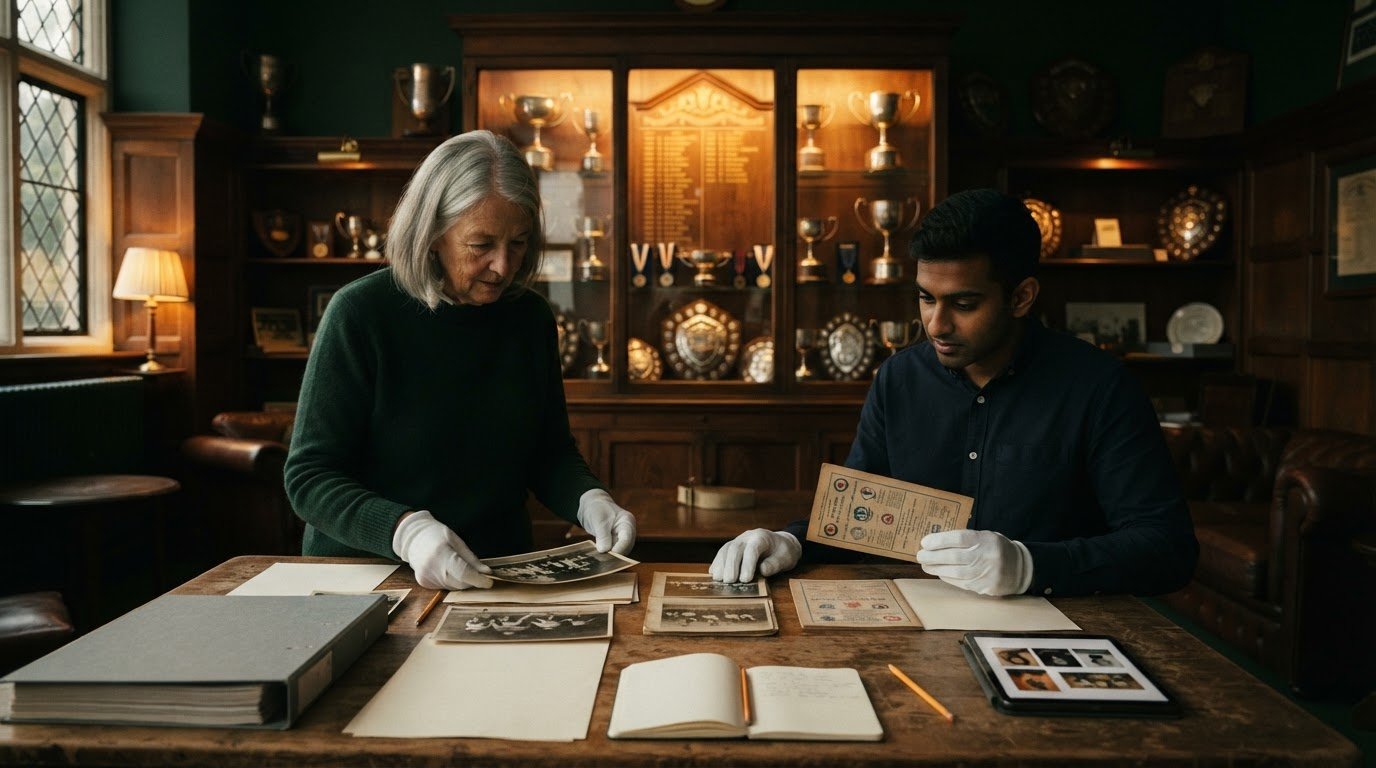
A trophy cupboard opens a window on your club’s past, but the names, dates and stories behind each award may be scattered across old files, members’ homes and personal memories. Preserving sports club history means bringing those pieces together before they’re lost, then linking each story to records or objects that support it.
If you’re unsure where to begin, you’re not alone. Club volunteers often inherit incomplete records and conflicting recollections, while photographs, programmes and documents need careful handling. You don’t need to know every detail at the outset. You do need a clear process for gathering evidence, checking facts and recording gaps honestly.
This guide sets out a practical process: define the scope, inventory sources, collect material and oral histories, verify names and dates, protect original items, and organise digital copies so they’re easier to find and share. You’ll also learn how to set access and privacy boundaries, helping your club pass on a history that future members can use and trust.
Key Takeaways
- Set a clear purpose for preserving sports club history so you can protect the evidence and context behind its stories.
- Build a source inventory, then gather records, objects and members’ recollections in a manageable sequence.
- Check names, dates and event details against available evidence, and keep conflicting accounts visible rather than forcing a single version.
- Make digital copies easier to find while handling original materials carefully and avoiding unnecessary changes.
- Choose a sharing format that suits your members, with a simple process for reviewing additions and corrections.
Table of Contents
- Why preserving sports club history starts with a clear purpose
- How to gather sports club history from records, objects and people
- How to verify and organise sports club history before publishing
- How to preserve original materials and maintain usable digital records
- How to share sports club history and keep it alive for future members
Why preserving sports club history starts with a clear purpose
A club’s past rarely sits in one neat archive. Match programmes may be in a cupboard, photographs in members’ homes, trophies on display and important details in the memories of people who were there. Preserving sports club history means protecting the evidence and context behind these stories, not simply arranging results into a timeline. A list of winners alone can miss how a team formed, why the club changed or who helped keep it running.
Before collecting anything, decide what the project should achieve. Is it meant to help new members understand the club’s traditions, record a milestone, support research or make achievements easier to discover? The answer will shape what you gather, how much detail you record and how you share it. Start with a manageable priority, such as founding records, a major turning point or the club’s honours, rather than trying to document everything at once.
What should a sports club history include?
Consider the club’s founding, changes in activities or teams, achievements and significant turning points. Include the people and community connections behind those events. Volunteers, members, coaches and supporters may explain how the club developed in ways that results alone cannot. Recorded interviews can capture these perspectives; the oral history approach focuses on gathering and interpreting people’s recollections. A useful account can be selective. It doesn’t need to cover every season.
How can a volunteer team set a realistic scope?
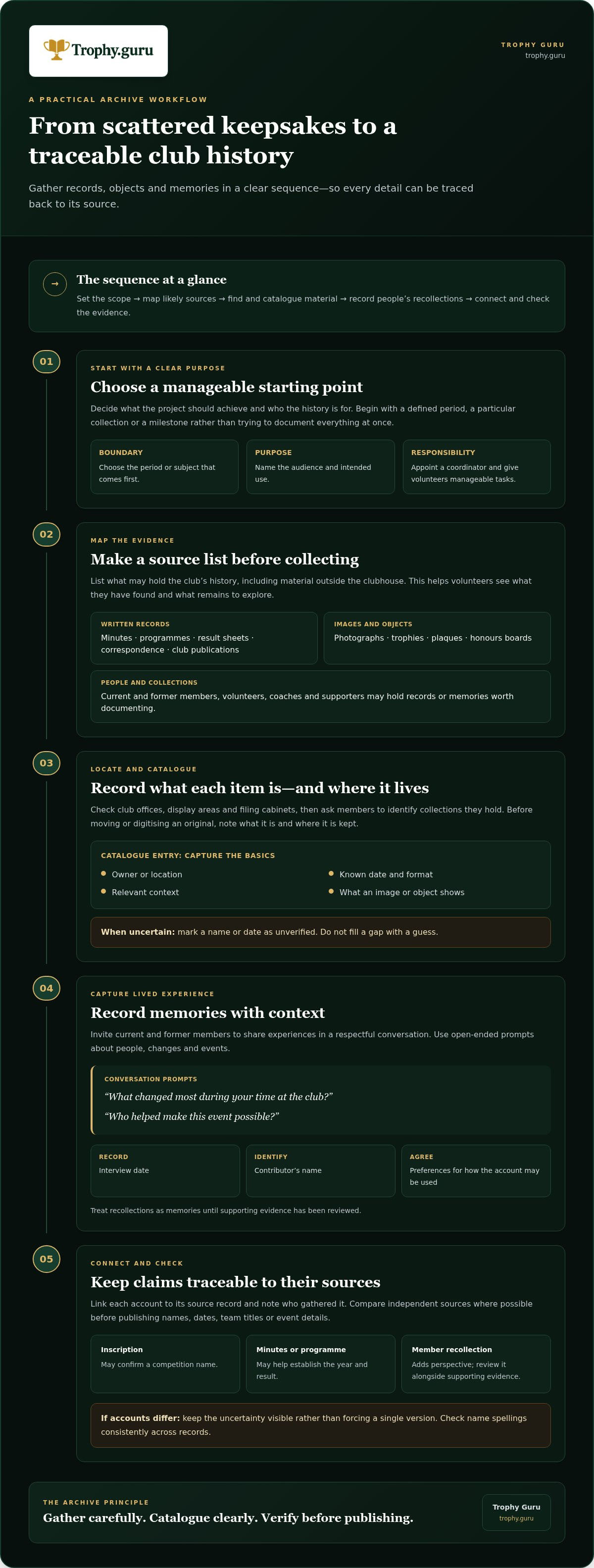
Choose a clear starting point: a defined period, a particular collection or a milestone the club wants to mark. Agree who the history is for and how they might use it, whether as a publication, a display or a reference for future volunteers. Appoint one coordinator to keep decisions and records organised, then divide practical tasks among interested members according to their time and knowledge.
- Set a boundary: decide what period or subject comes first.
- Agree the purpose: name the audience and intended use.
- Share responsibility: give each volunteer a clear, manageable task.
A club-history preservation project is a planned effort to identify, document and protect selected evidence and memories, then make them useful to a chosen audience. A clear purpose gives volunteers a consistent basis for deciding what to include, what can wait and how the club’s story should be told.
How to gather sports club history from records, objects and people
Once the project’s scope is agreed, gather material in a sequence that keeps sources traceable: define what you need, list likely sources, collect documents and recollections, then record what each item contributes. This prevents the search from turning into a pile of unidentified files and helps volunteers see what they’ve found and what remains to explore.
Start with a source list covering minutes, programmes, photographs, result sheets, trophies, plaques, correspondence and existing club publications. Include material held outside the clubhouse, since members and former volunteers may have kept useful records at home. For award inscriptions, How to Digitize Sports Club Award Records explains how digitised details can become easier to search and reference.
Where can clubs find historical records and memorabilia?
Check club offices, display areas and filing cabinets, then invite members to identify collections they hold. Ask specifically about team photographs, programmes, result sheets, plaques and correspondence. Before moving or digitising an original, note what it is and where it’s kept. This basic catalogue entry helps the team trace items, avoid misplacing them and plan how to handle fragile material.
Give each source its own catalogue entry. Record its owner or location, known date, format and relevant context. For a photograph, that might include the team, event or people shown. For a trophy, note the inscription and any known competition details. If a name or date is uncertain, label it as unverified rather than filling the gap with a guess.
How should clubs record memories and oral histories?
Invite current and former members to share their experiences in a respectful conversation. Prepare open-ended prompts about people, changes and events, such as “What changed most during your time at the club?” or “Who helped make this event possible?” Record the interview date, contributor’s name and preferences for how their account may be used. Treat recollections as memories until supporting evidence has been reviewed.
Connect each account to its source record and note who gathered it. For award material, photographs of trophies, plaques and honours boards can be transcribed into searchable records of names, years and details. Trophy Guru’s AI trophy transcription helps clubs organise these details as part of a wider history project.
How to verify and organise sports club history before publishing
A well-organised archive needs more than collected material. Names, dates, team titles and event details can differ between a trophy inscription, a result sheet and a member’s recollection. Check claims against available evidence before publishing. That way, an uncertain detail doesn’t become accepted as fact simply because it appears in a draft.
How can clubs check names, dates and results?
Compare independent sources where possible. An inscription may confirm a competition name, while minutes, a programme or a contemporary report could help establish the year and result. Check spellings consistently, especially when names appear in several records. If sources disagree, retain both versions and note where each came from. Mark details as uncertain when the evidence is incomplete instead of silently choosing an estimate.
A simple evidence table gives volunteers a consistent way to review claims:
| Source type | Date | Details recorded | Confidence |
|---|---|---|---|
| Trophy inscription | Year shown | Competition and winner | High for wording; compare date |
| Programme | Event date | Team names and fixture details | High if produced at the time |
| Member recollection | Interview date | Event context and people involved | Unverified until compared |
How should a club organise evidence and provenance?
Give every item a consistent identifier. Record its source, date, owner or location, and relevant context, then connect those details to each fact the item supports. Keep the original wording separate from the transcription and any editorial note. This lets future volunteers distinguish what a source says from what the club has inferred. Restrict access to sensitive personal information where appropriate.
For trophy and honours-board records, AI-assisted transcription extracts names, years and details from photographs to help create searchable digital records. Keep each image linked to its transcription and review the extracted details against the source. Trophy Guru’s AI trophy transcription supports this part of a wider history project.
A clear source trail makes preserving sports club history more reliable. It also gives future volunteers a way to retrace decisions, record corrections and update entries when stronger evidence comes to light.
How to preserve original materials and maintain usable digital records
Digital copies make information easier to search and share, but they don’t replace the original item. A photograph can preserve access to a programme or trophy inscription while the physical object remains part of the club’s collection. Treat these as two connected tasks: care for the source material, then maintain a clear digital record that points back to it.
How can clubs look after physical history materials?
Start with an inventory before relocating, cleaning or altering anything. Record what each item is, where it’s kept and who owns it. For items loaned by members, note any handling or return preferences. Store photographs and documents in an organised place suited to their materials, and avoid unnecessary changes while documenting them. If an item appears fragile, limit handling and record its condition rather than attempting a repair.
Keep catalogue details with the item’s identifier, not just in one volunteer’s notes. If a programme moves from a filing cabinet to another storage place, update the record so the source remains traceable.
How can clubs keep digital records findable over time?
Use a consistent filename that identifies the item and gives useful context. For example, “programme_1984_club-final_source-scan” is easier to recognise than “scan003”. Agree on a simple folder structure by collection, year or record type, then apply it consistently. Keep a catalogue linking each digital file to its physical source, date, owner or location, and relevant notes.
Keep copies in more than one secure location, and periodically check that authorised volunteers can still access them. A backup is useful only if the club knows where it is and can retrieve it. Maintain a short update log too: record what changed, when, who made the change and why. New volunteers can then understand the archive’s history instead of guessing which version is current.
- Keep the source traceable: connect each digital copy to its item identifier and context.
- Use a consistent system: apply agreed filenames and folder names.
- Record changes: note corrections, additions and updates in a shared log.
For awards, photographs of trophies, plaques and honours boards can become searchable records of names, years and details. Trophy Guru’s searchable trophy-record workflow helps make those achievements easier to find alongside the club’s wider archive. Explore searchable trophy records as one practical part of preserving sports club history.
How to share sports club history and keep it alive for future members
An archive earns its value when members can use it. Choose a format that fits the material and the people who’ll read it: a club publication can tell a connected story, a display can celebrate key moments, and a searchable online record can help members find a name or achievement. You don’t have to put every source in one format. Where practical, link captions and entries to their supporting records so readers can explore the context behind each detail.
How can a club make its history accessible to members?
Use clear headings, dates and descriptions, and arrange information in a way that makes sense to your audience. A digital honours board can present winners and achievements in a searchable form, complementing physical trophies and plaques. Trophy Guru uses AI-assisted transcription to extract names, years and details from photographs of trophies, plaques and honours boards, then organises that information into searchable digital records. The online honours board gives members a place to browse, and clubs can export archive data as a CSV file.
For broader planning, How to Preserve Club History Online can help you think through how digital material should be arranged and shared. Whatever format you choose, explain how entries are sourced and distinguish verified details from recollections or information still being checked.
How can clubs keep adding to their history?
Appoint a history custodian to review submissions and maintain the archive. Invite members to contribute names, dates, photographs or context, then check new material before adding it to the published record. A simple submission process can ask contributors to describe the item or event, say where their information came from and flag anything they’re unsure about.
- Record new results and milestones: add them regularly, rather than waiting for a major anniversary.
- Review corrections: compare proposed changes with available evidence and note why an entry was updated.
- Keep the source trail: retain the link between a published detail and the record or contributor behind it.
This steady approach makes preserving sports club history an ongoing part of club life, not a project that disappears when its first volunteers move on. Start with one award record: try Trophy Guru’s free initial trophy transcription to see how a photograph can become a searchable record of club achievements.
Start building a history future members can trust
Preserving sports club history becomes manageable when the work has a clear purpose and a steady process. Decide what matters most to your club, gather records and recollections, then check details against the evidence available. Keep originals carefully, make digital records easy to find and give someone responsibility for reviewing new contributions.
Small steps can create lasting value. A well-labelled programme, a verified result or a recorded member’s memory can help future volunteers understand not only what happened, but who made it possible. For trophy and honours-board images, AI-assisted transcription captures names, years and details in searchable digital records. CSV export also supports ongoing record-keeping beyond the initial project.
Begin with one award. Try one trophy transcription free and see how a photograph can become a useful, searchable record. Your club doesn’t need to document everything at once. Each carefully gathered and recorded detail gives the next generation a stronger connection to its shared past.
Frequently Asked Questions
How do you preserve sports club history?
Start by agreeing what the project will cover and who it’s for. Inventory documents, photographs, trophies, plaques and existing accounts, then invite people with first-hand memories to share their stories. Record where each detail came from and check important names and dates against available evidence. Organise original items carefully and make digital copies easier to find. Assign a custodian to maintain the records as the club, its teams and its activities change.
What records should a sports club keep for its history?
Keep records that fit the club’s agreed scope, such as meeting minutes, programmes, result sheets, team lists, photographs and existing publications. Trophies and plaques can document awards, while oral histories may add context missing from formal records. For each item, note its source and relevant date. If accounts conflict, keep the different versions for review rather than presenting uncertain details as fact or discarding useful evidence.
How can a club verify its historical records?
Compare names, dates, team titles and results across sources such as inscriptions, minutes, programmes and contemporary reports. Note which source supports each detail, and preserve the original wording where practical. If records disagree or a recollection can’t be corroborated, label the detail as uncertain instead of choosing a version without explanation. A clear evidence trail helps future volunteers understand how the club reached its conclusions and revisit them if new material appears.
Can a sports club digitise its history without specialist knowledge?
Yes. A club can begin with a small, organised collection rather than trying to digitise everything at once. List the material, create suitable scans or photographs, and use consistent filenames so records are easy to identify. Keep originals and note where each digital copy came from. Avoid risky handling of fragile items. A straightforward, repeatable process is more useful than a large collection of files with no labels or source information.
How do you preserve old trophies and honours boards?
Document each item’s appearance, inscriptions, location and known context before moving or changing it. Handle trophies and honours boards carefully, and don’t clean, polish or alter them as part of recording their history. A photograph can provide a reference to the inscription, while a checked transcription makes names and dates easier to search. Keep the image, transcription and source details linked so later readers can compare the record with the original.
How can a sports club make its history searchable online?
Organise records using consistent names, dates and categories, then present them in a format members can navigate. Trophy Guru uses AI-assisted transcription to extract names, years and details from trophy, plaque and honours-board images, creating searchable digital records. Members can browse an online honours board, and clubs can export archive data as a CSV file. Keep source context attached and review corrections before updating entries.
Why should a sports club record oral histories?
Oral histories preserve personal experiences and context that minutes or result sheets may not capture, such as why a team formed or how an event changed the club. Use open-ended questions, record who is speaking and when, and note their preferences for how the interview may be used. Treat recollections respectfully, and compare factual details with other evidence where possible. This keeps memories valuable while distinguishing personal accounts from independently supported facts.